


Can I Give My Dog Benadryl for Anxiety?

Written by Finn Team · Published October 19, 2026 · Updated October 19, 2026
Benadryl (diphenhydramine) is an antihistamine, not an anti-anxiety medication. Any calm you see is sedation, a side effect, and it does nothing for the fear underneath. PetMD's veterinary drug page says plainly that it is not typically effective for anxiety. For nerves you need a different plan: preparation, a calming chew on the right timeline, or a vet conversation.
Does Benadryl help with dog anxiety?
Not in any meaningful way. Diphenhydramine blocks histamine, which drives itching, hives, and swelling after a bee sting. Fear and panic are not histamine problems, so the drug has nothing to act on.
What it does have is a sedating side effect. The American Kennel Club notes that because Benadryl causes drowsiness, it has long been used as a mild tranquilizer for anxious or car-sick pups, while urging owners to work with their vet on what is actually driving the anxiety.
Why does my dog seem calmer on Benadryl then?
Because a groggy pup moves less. Less pacing and whining looks like less fear, but what your dog feels may be unchanged.
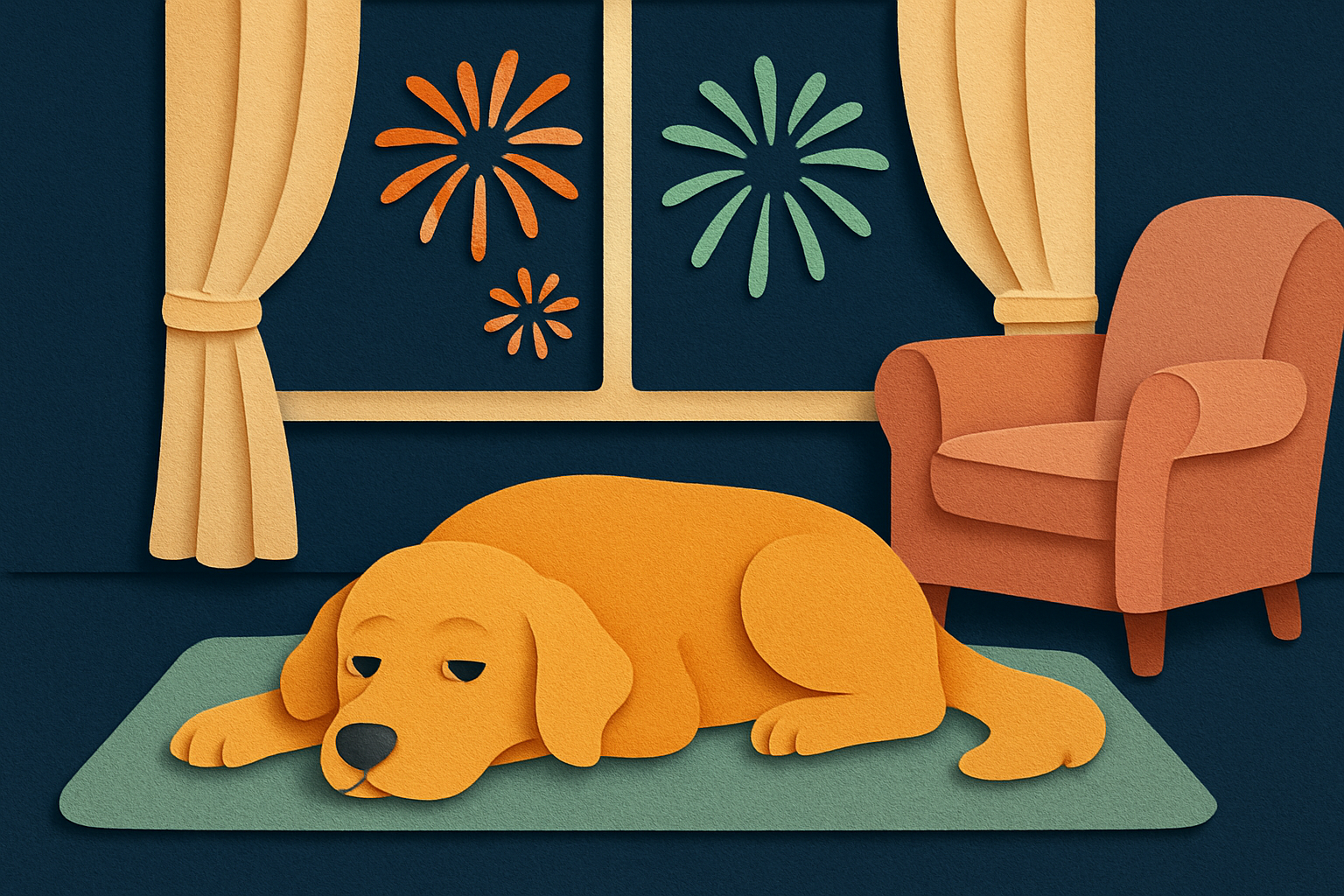
Behavior specialists make this point about older sedatives. The European Society of Veterinary Clinical Ethology warns that acepromazine blocks motor responses without altering the sensory experience, so the dog still perceives the frightening thing while being less able to respond. Benadryl is far milder, but the principle holds: sedation is not the same as feeling safe. A pup who spends the fireworks show quietly terrified is still rehearsing the fear.
There is a second catch. Diphenhydramine does not sedate every dog. Some get the opposite reaction and turn restless and wired, the last thing you want ten minutes before the neighborhood show starts.
Is my pup itchy or anxious? Two very different Benadryl questions
People reach for the pink box for one of two reasons, and only one is a fair use of the drug. Sort out which one you have before you dose anything.
| What you are seeing | Likely driver | Where Benadryl fits |
|---|---|---|
| Sudden hives, facial puffiness, a bee sting or bug bite | Histamine | A reasonable short-term tool, vet-guided |
| Chronic scratching, licked paws, recurring ear gunk | Allergic skin disease | Weak. Antihistamines underperform here |
| Trembling, hiding, drooling, pacing at fireworks or the clinic | Fear and anxiety | No real role |
| Drooling and vomiting only in the car | Motion sickness, sometimes plus fear | Sometimes used, but better options exist |
Landed in the top two rows? For ongoing seasonal itch, a daily chew like Allergy & Itch supports that side of things, not the nerves side.
Car rides: is it motion sickness or fear?
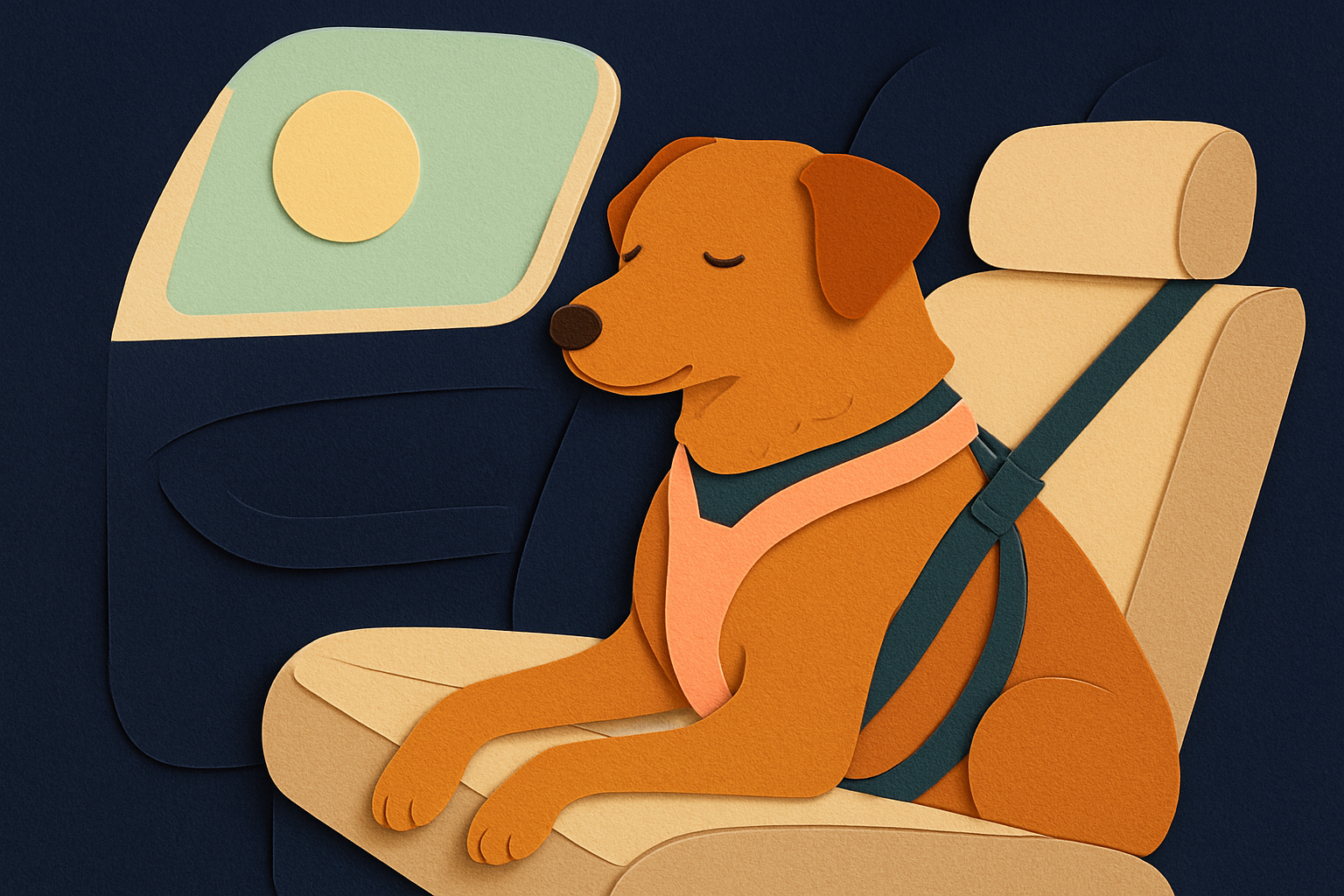
Car trouble splits into two problems that look identical from the driver's seat. Nausea and anxiety both cause drooling, lip licking, whining, and shaking, so the tell is the pattern, not the symptom.
- Does the drooling start before the engine does? Sliming the back seat in the driveway is anticipation and fear, not motion.
- Does it ease on long, smooth highway stretches? Motion sickness often does once the winding roads stop. Fear usually does not.
- Is the destination always the vet or the groomer? Then the car has become a predictor, and short drives that end somewhere wonderful are the repair.
If it reads like nausea, ask your vet about maropitant (Cerenia), FDA-approved to prevent vomiting from motion sickness in dogs. Keep in mind that diphenhydramine takes about one to two hours to work, which matters if you planned to hand over a tablet in the driveway.
What should I do before fireworks, a vet visit, or a car ride?
Build the plan around the size of the fear. Mild nerves respond to setup changes plus a calming chew. True panic needs your vet.
For mild to moderate nerves
- Set the room up first. Interior room, curtains closed, a fan or music to blunt the booms, covered crate if your pup likes a den.
- Feed something they have to work for. A stuffed frozen toy during the event gives the brain a competing job.
- Time the chew correctly. Ingredients like L-theanine, chamomile, and melatonin need a head start. Calming Aid is made for that window, give it 30 to 60 minutes before the stressful event.
- Practice on a boring day. Try the first chew on a quiet Tuesday, so you know how your pup responds before the stakes are high.
For the vet visit specifically
- Book the quietest slot, usually first thing or right after lunch, and tell the clinic your pup is nervous so they can room you fast.
- Do two or three drop-in weigh-ins with high-value treats and no exam at all.
- Bring chicken or squeeze cheese. Food changes the association faster than anything else you can carry.
A soft chew with chamomile, passion flower, valerian root, L-theanine, and melatonin, given 30 to 60 minutes before the thing your pup dreads.
Shop Calming AidWhen should I ask my vet about real anxiety medication?
If your pup truly panics, meaning escape attempts, soiling, refusing food, or shaking for hours, setup and supplements will not carry the load alone. That is a medical conversation.
A published review of pre-appointment medications for fear and anxiety at veterinary visits found usable evidence for four drugs: gabapentin, trazodone, oral transmucosal dexmedetomidine, and alprazolam. For noise specifically, dexmedetomidine oromucosal gel is the one product FDA-approved for noise aversion in dogs, placed on the gums 30 to 60 minutes ahead. None sit on a drugstore shelf, and none should be guessed at. Ask early, since slots before New Year's and the Fourth fill up fast.
Pair any medication with desensitization. Playing recorded fireworks so low your pup barely notices, during dinner or a game, then raising the volume in tiny steps over weeks, is the part that changes the fear itself.
FAQ
Can I give my dog Benadryl for fireworks?
You can give it safely at the right dose, but it is unlikely to help the fear. Drowsiness is not anxiety relief. A calming chew timed 30 to 60 minutes ahead, or a vet-prescribed option, fits better.
How much Benadryl is safe for a dog?
The usual range is about 1 mg per pound (2 to 4 mg per kilogram), two to three times daily, plain diphenhydramine only. Confirm with your vet first.
Can Benadryl make my dog more anxious?
It can. Some dogs have a paradoxical reaction and turn restless or wired instead of sleepy. One more reason to test anything new on an ordinary day.
This article is for general education and is not a substitute for veterinary advice. If your pup has ongoing or severe symptoms, check in with your vet.