


Dog Panics in Thunderstorms? Start Before It Hits

Written by Finn Team · Published August 4, 2026 · Updated August 25, 2026
If your pup is pacing before you hear a single rumble, they are reacting to what arrives ahead of the thunder: falling barometric pressure, wind, the smell of rain, even static in their coat. The real work happens before the storm, not in the middle of it. Build a den they already love, exercise early, start sound masking, and give calming support 30 to 60 minutes before the forecast window opens.
Why does my dog panic before the storm even arrives?
Because thunder is the last cue in the chain, not the first. Storm-anxious dogs react to a cluster of signals, most of which land before the first clap. Veterinary behaviorists note that storm-phobic dogs can react to wind, rain, lightning, barometric pressure changes, the "smell of rain," static electricity, and even a particular time of day. As one certified trainer told the AKC, dogs are so much more sensitive to sound than we are that they often detect thunder well before we can.
This is not drama. In one study, dogs exposed to recorded thunderstorm sounds showed a 207% jump in salivary cortisol, a stress hormone. Early signs, before the trembling, include yawning, lip licking, clinginess, panting when it is not hot, and refusing food.
How early should I start a storm-watch routine?
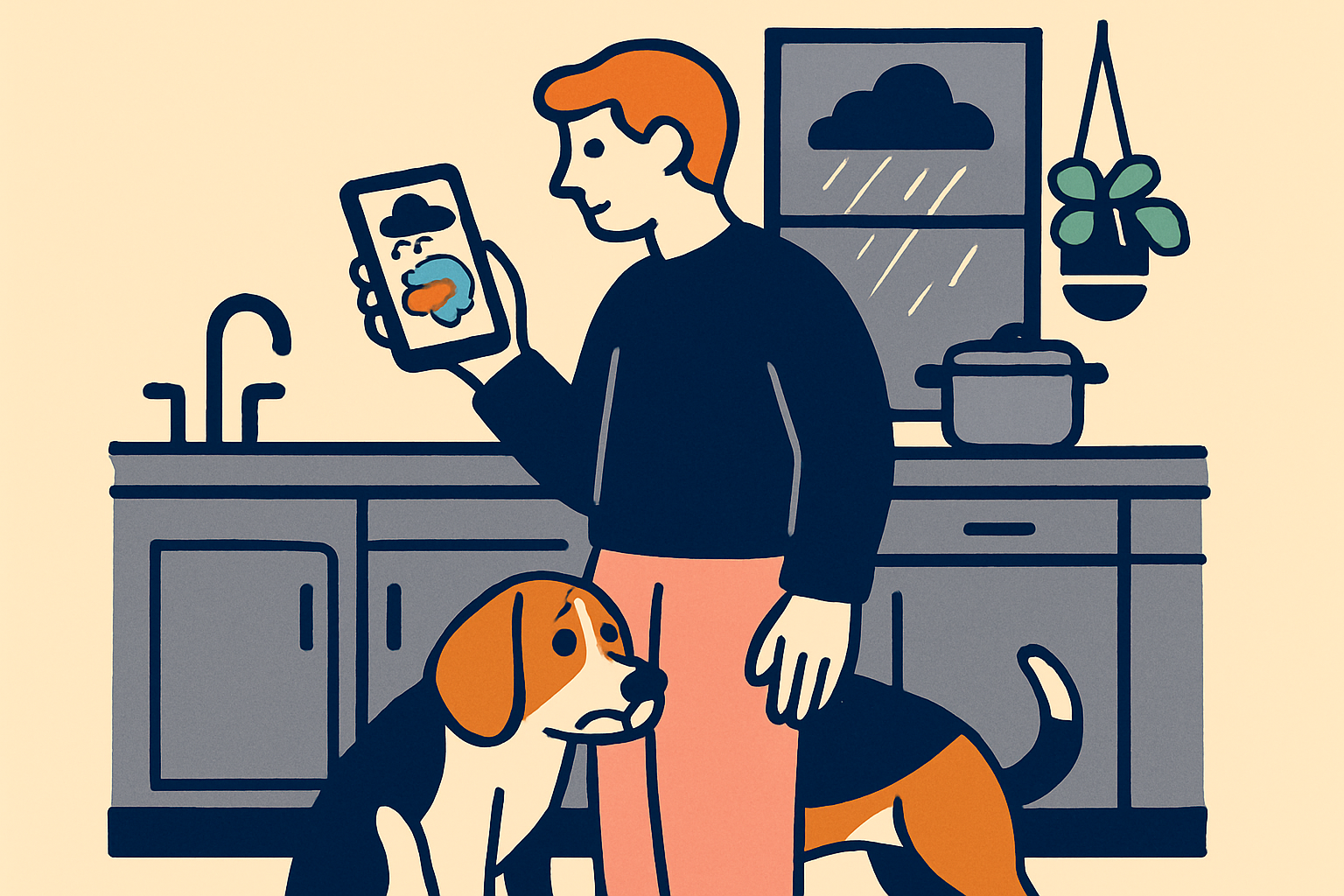
Start the morning of. Anything given to a panicking pup mid-storm is already behind, because it needs time to take effect. Veterinary guidance is blunt about timing: calming products and medications need to be active in the body before any noise starts or panic sets in, usually at least an hour before the event. Check the radar with your morning coffee, then work backward.
| When | What you do |
|---|---|
| Morning of | Check the radar, plan around the likely window |
| 3 to 4 hours before | Real exercise and a sniffy walk, then a potty break |
| 60 to 90 min before | Den set up, windows and blinds closed, sound masking on |
| 30 to 60 min before | Calming chew, wrap on, lick mat ready |
What makes a good storm den?
Small, dark, interior, and already familiar. The goal is a spot your pup chooses on a sunny Tuesday, not a place you steer them into once the wind picks up.
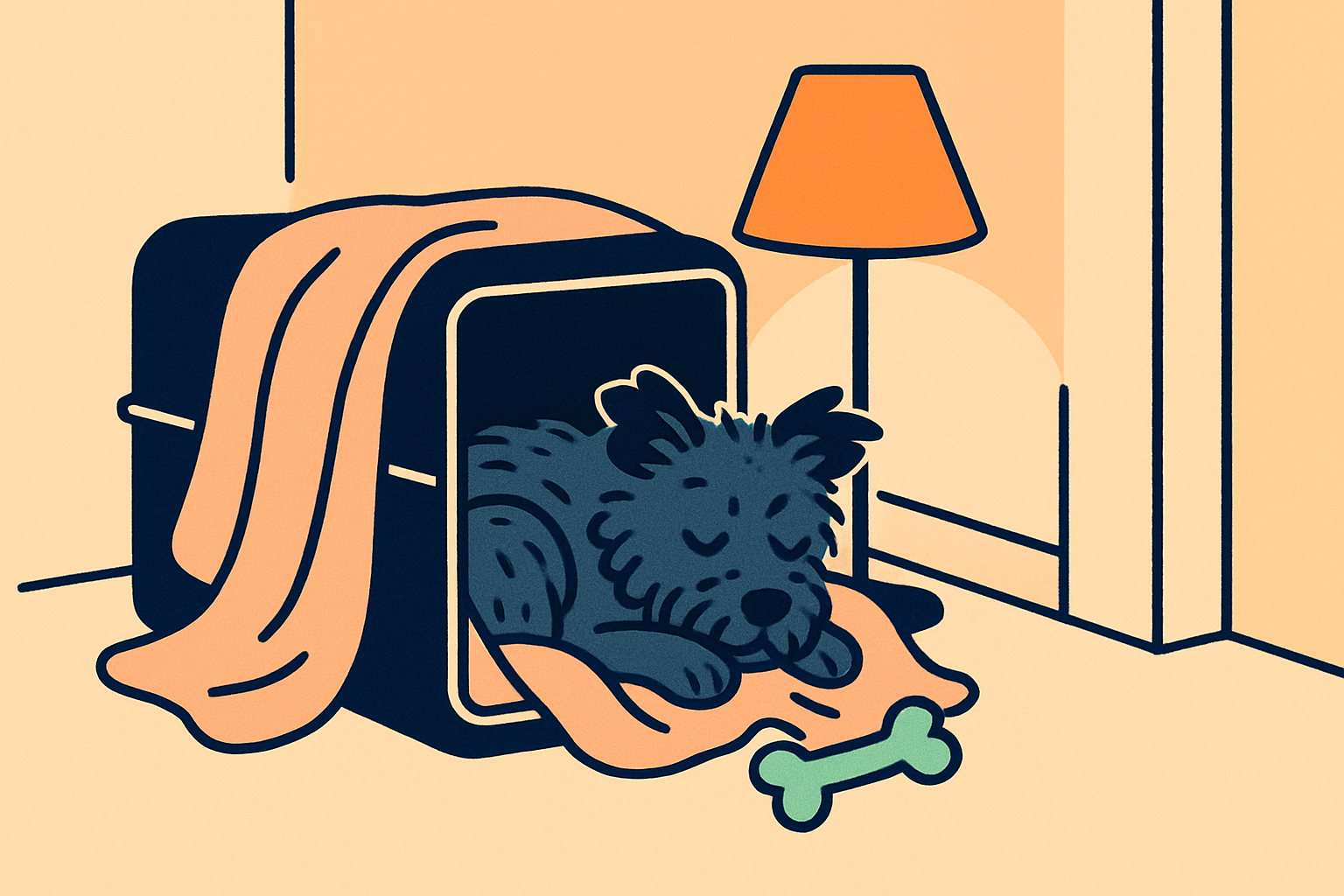
Dogs gravitate to den-like spaces in storms because an enclosed space means nothing can sneak up on them, which is why a crate or a dark closet often reads as soothing rather than scary. Pick a windowless room, or close the blinds so lightning flashes do not pile on. An open crate with a blanket over three sides, a laundry room, a bathroom (plenty of pups love the bathtub), or a closet floor all work.
- Leave the door open. A pup who feels trapped can panic harder.
- Feed the association. Toss treats in on calm days, save the best chew for that spot.
Does sound masking really help?
Yes, and it is the cheapest win available. Steady background noise blunts the sharp edge of thunder so each crack is less of a startle.
Close the windows, then add sound. A fan, a window AC unit, a white noise machine, or music with a steady beat all work, and it does not need to be loud as long as it is continuous. Veterinary handouts recommend a radio, TV, fan, or white noise device plus a blacked-out room. Start it early so the sound does not become the new warning signal, and do not blast thunderstorm recordings hoping your pup gets used to them, because that can deepen the fear.
Should I exercise my dog before a storm?
Yes, and earlier than you think. A pup who has already had a walk and a good sniffing session starts the storm from a lower baseline, and is not desperate for a potty break at the worst moment. In August, that means early morning. Finish three to four hours before the forecast window so your pup is settled rather than revved up, then keep the afternoon quiet with a lick mat in the den.
What calming support can I give ahead of a storm?
Give it before the trigger, not after. For a calming chew, 30 to 60 minutes ahead of the window is the sweet spot, and the same goes for wraps and pheromone diffusers.
A few ingredients have real research behind them. L-theanine, an amino acid from tea leaves, was studied in storm-sensitive dogs in an open-label trial in the Journal of Veterinary Behavior, where owners reported less hiding, pacing, panting, and drooling when it was given ahead of storms. Melatonin is common for noise fear too, and chamomile, passion flower, and valerian root round out the calming botanicals.
Finn's Calming Aid was built for this pre-game: chamomile, passion flower, valerian root, L-theanine, and melatonin in a soft chew, given 30 to 60 minutes before the storm window.
Shop Calming AidAnxiety wraps help some pups: in one study, 89% of owners called one at least partially effective after five uses. And if storm season always leaves your pup with loose stools, a daily pre and probiotic chew supports firmer stools.
What should I do while it is actually happening?
Be boring, stay nearby, and let your pup choose their spot. You are the calmest thing in the house, and that matters more than any product.
Never scold a frightened dog. Punishment confirms there really is something to fear and makes the next storm worse, and that goes for chewing, whining, and accidents. Let them lean on you if they want to. Many behaviorists also use "storm parties," pairing dark skies and rain with hot dogs or a special toy so those cues start predicting something good. And because panicked dogs bolt, latch the gates and check that ID tags and microchip details are current.
When should I call my vet?
Call if your pup injures themselves, tries to escape the house, or cannot settle for hours afterward. There are prescription options for real panic, given ahead of the forecast like everything else here, and a veterinary behaviorist can build an off-season plan.
FAQ
How far in advance can dogs sense a storm coming?
No exact number, but owners commonly notice changes 30 minutes to a few hours out. Dogs pick up pressure drops, wind, distant thunder we cannot hear yet, and the smell of rain.
Should I let my dog hide in the bathtub or under the bed?
Yes. Hiding is a coping strategy, not misbehavior, and pulling a pup out of a chosen spot usually raises the panic.
Can I give my dog melatonin for thunderstorms?
Melatonin is often used for noise and storm fear and shows up in calming chews alongside L-theanine and chamomile. Ask your vet about the right amount for your pup's weight, and check that any human product has no xylitol.
This article is for general education and is not a substitute for veterinary advice. If your pup has ongoing or severe symptoms, check in with your vet.