


Dog Scratching from Seasonal Allergies? What Actually Helps

Written by Finn Team · Published September 17, 2026 · Updated September 17, 2026
If your pup's scratching started with pollen season and the skin underneath still looks normal, it is fair to start at home: rinse the allergens off, keep flea prevention airtight, and support the skin barrier from the inside. Raw oozing spots, a smelly ear, thinning hair, or itching that keeps everyone awake is a vet visit, not a supplement question. Seasonal itch is manageable, but it is managed, not cured.
Is this actually seasonal allergies, or something else?
Atopic (environmental) allergy flares on a calendar. It may affect 10 to 15 percent of dogs, and the itch has a seasonal pattern in roughly 40 to 75 percent of cases. Before you buy anything, run this 60-second self-check.
- Itch over the tail head and back half, with black-pepper flecks in the coat: think flea allergy. Flea-allergic dogs react to saliva from the bite, itch most intensely over the tail head, and often show flea dirt that looks like black pepper. One bite is enough.
- Paws, ears, muzzle, armpits, groin and belly, worse outdoors, better after frost: think environmental. Atopic dogs classically chew their feet, rub their faces, and scratch behind the elbows.
- Year-round itch at the ears and paws, sometimes with loose stool: ask your vet about a food trial. Food-related itch ignores the seasons.
- Greasy coat, musty odor, or dark thickened skin: that points to a secondary yeast or bacterial infection, which needs medication.
Note when it started, where your dog scratches most, and how often. That log is the most useful thing you can hand your vet.
When should I stop reading and call the vet?
Any of these means home care is not today's answer. Book the appointment, then return to the supportive steps once the flare settles.
- An open, oozing, painful spot that appeared fast (hot spots can reach coaster size overnight)
- Ear signs: head shaking, odor, discharge, or an ear canal that hurts to touch
- Hair loss, scabbing, or skin that is darkened and leathery
- Itching that interrupts sleep, or chewing that draws blood
- Hives, facial swelling, or sudden whole-body itch, which needs same-day care
- Scratching that has not improved after two to four weeks of consistent home care
Ear infections, skin infections, and hot spots travel with atopy, so a repeat ear is a signal to address the allergy more seriously.
Are Apoquel, Cytopoint, and steroids overkill for seasonal itch?
For a mildly itchy dog with normal-looking skin, often yes, and a layered home routine may be enough. For moderate to severe itch, or any dog with infected skin, prescription therapy is the right call, and waiting makes the skin worse. No chew, shampoo, or oil outperforms these medications, and anyone who says otherwise is selling.
Your vet is choosing from a real menu: oclacitinib (Apoquel) works fast with fewer side effects than corticosteroids, lokivetmab (Cytopoint) is an injection given about every four to eight weeks, steroids are very effective for acute flares but belong at the lowest dose for the shortest time, and antihistamines prevent mild itch better than they calm intense itch. Immunotherapy is the closest thing to a long-term answer, worth asking about if your dog flares yearly.
What actually helps at home, and how often?
The goal is fewer allergens on the skin, plus a stronger barrier. Here are the numbers.
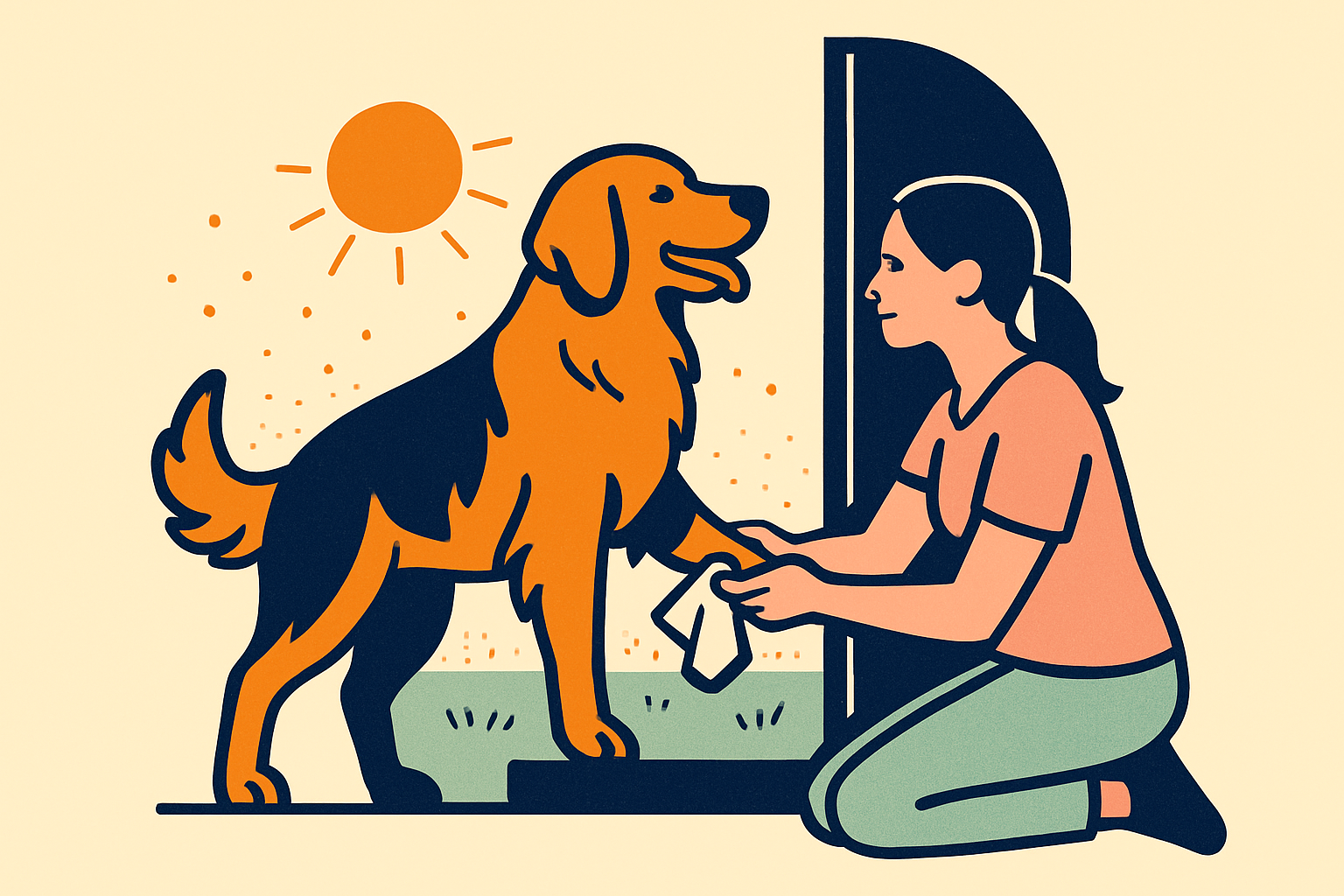
- Wipe-downs after every outdoor trip. A damp cloth or fragrance-free wipe over paws, between toes, belly, armpits, and muzzle, which are the spots dogs chew.
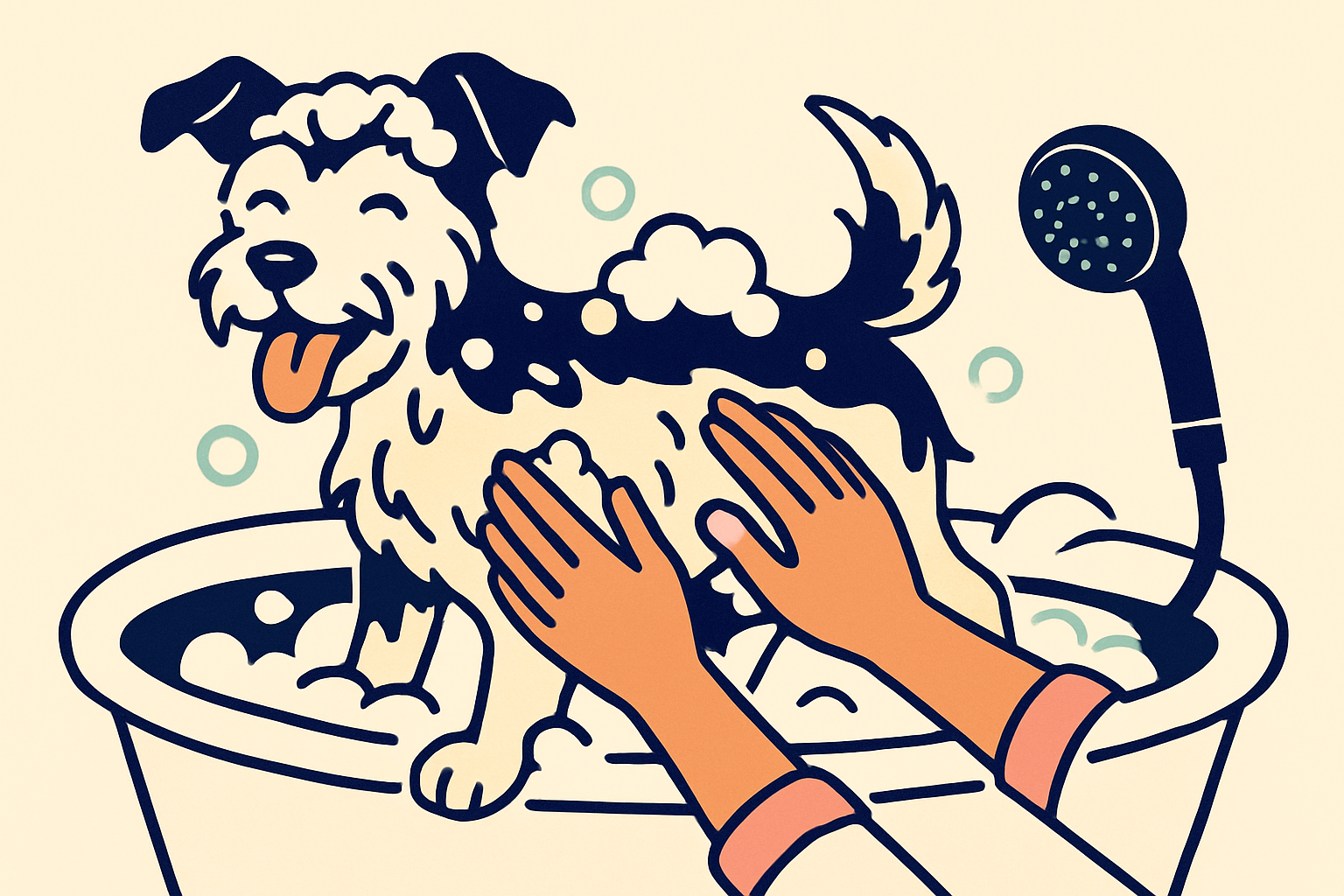
- Bathe weekly to every other week in season. Gentle, soap-free, moisturizing shampoo, lukewarm water, 10 minutes of contact time before rinsing. Do not skip baths for fear of drying the coat: in allergic dogs, baths with moisturizing, lipid-containing products have been shown to improve both lesions and itch.
- Keep flea and tick prevention on schedule, year-round. Ruling out fleas is step one of any allergy workup.
- Wash bedding weekly in hot water and vacuum where your dog sleeps.
- Look after the paws. Licking plus wet grass leaves pads dry and cracked, so a plant-based balm like Paw Hero helps protect and soften them.
Why the barrier focus? Allergic skin has altered lipid and ceramide production, which leaves it drier and lets more allergens through, feeding the itch cycle.
Why do omega-3s help itchy skin, and how long do they take?
EPA and DHA from marine oils compete with omega-6 fatty acids in the skin, shifting the inflammatory mediators the body makes toward less irritating ones, and they feed the lipid layer that holds moisture in. Cornell lists essential fatty acid supplements as something to use in conjunction with other therapies, and oral omega-3 and omega-6 supplementation is common practice in allergic skin.
The catch is patience. Fatty acids get built into skin cells over time, so plan on four to eight weeks of daily dosing before judging results, and dose through the whole season. More on dosing in Is Fish Oil Good for a Dog's Coat and Joints?, and if dull coat and shedding are part of the picture, Skin & Coat pairs wild Alaskan salmon oil with biotin, vitamin E, and zinc.
Where do itch supplements fit, honestly?
In the supportive tier, for mild to moderate seasonal itch, alongside flea prevention and pollen management. "Supportive, not curative" means the ingredients help maintain a calmer, better-defended skin barrier over weeks of daily use. They do not stop a reaction in progress or replace a prescription your vet recommends.
Finn's Allergy & Itch soft chew is made for this tier: colostrum and bee propolis for immune support, quercetin (a plant flavonoid with natural antihistamine properties), and salmon oil for the skin barrier. It is vet-formulated, third-party tested for purity and potency, and carries the NASC Quality Seal, which reflects independent audits of quality systems.
Shop Allergy & ItchGive it daily for four to six weeks alongside wipe-downs and baths, and keep the itch log. If scratching is unchanged or worse at two to four weeks, that is information for your vet, not a reason to add a fourth product. If your dog's flare tracks late-summer weed pollen, Why Is My Dog Itchy Again in Late August? maps that timing out.
FAQ
How fast should an itch chew work?
Weeks, not days. Give it four to six consecutive weeks before deciding. Anything promising overnight relief is overpromising.
Can I just give my dog Benadryl?
Ask your vet for a weight-based dose, and keep expectations modest. Antihistamines do more to prevent mild itch than to calm itch that is already intense.
Is weekly bathing too much?
Not with a gentle, soap-free, moisturizing shampoo. Weekly baths remove pollen, and moisturizing baths have been shown to help itch and lesions in allergic dogs.
Will my pup outgrow it?
Usually not. Signs typically begin between six months and three years of age, and atopy is lifelong, though most dogs live comfortably with a plan.
This article is for general education and is not a substitute for veterinary advice. If your pup has ongoing or severe symptoms, check in with your vet.