


How to Keep Your Dog Calm With a House Full of Guests

Written by Finn Team · Published November 2, 2026 · Updated November 2, 2026
The protocol that works is boring and specific: a quiet decompression room set up a day early, a doorbell routine rehearsed the week before, two or three guest rules you say out loud at the door, and a sniffy walk that ends an hour before the first car arrives. Most hosting-day meltdowns are a setup problem, not a temperament problem. Build the structure early and your pup gets to opt out of the party instead of coping with it.
What should I set up before guests arrive?
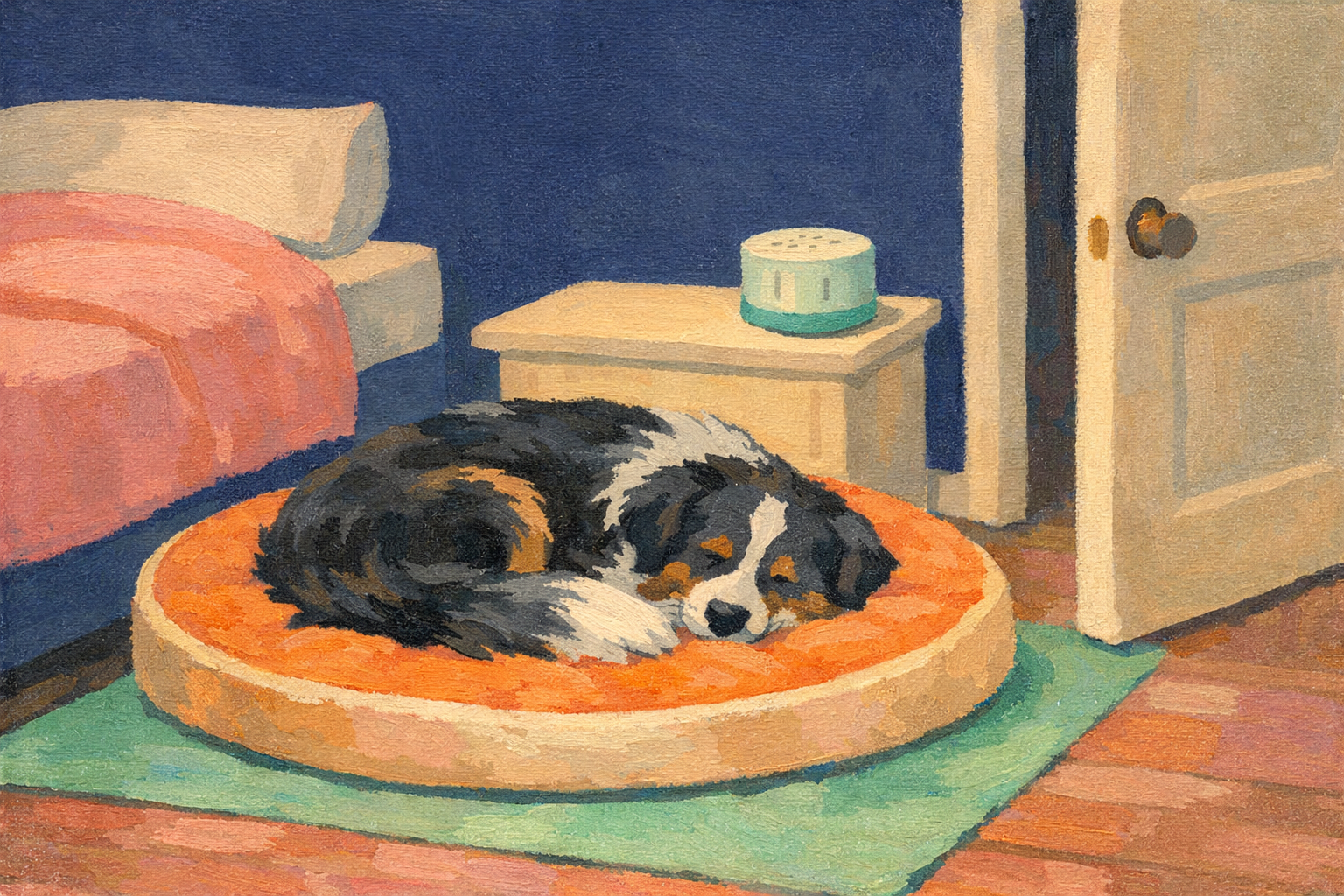
Set up one room your guests will never walk into, a day early, so it feels normal by the time the doorbell rings. The AVMA's holiday guidance is direct: every dog should have a quiet place indoors, a room or crate away from the commotion where guests will not follow.
What makes that room work:
- White noise or a fan, turned on an hour early so the sound does not arrive with the chaos.
- Their real bed, not a guest-room throw blanket. Familiar smell matters more than comfort.
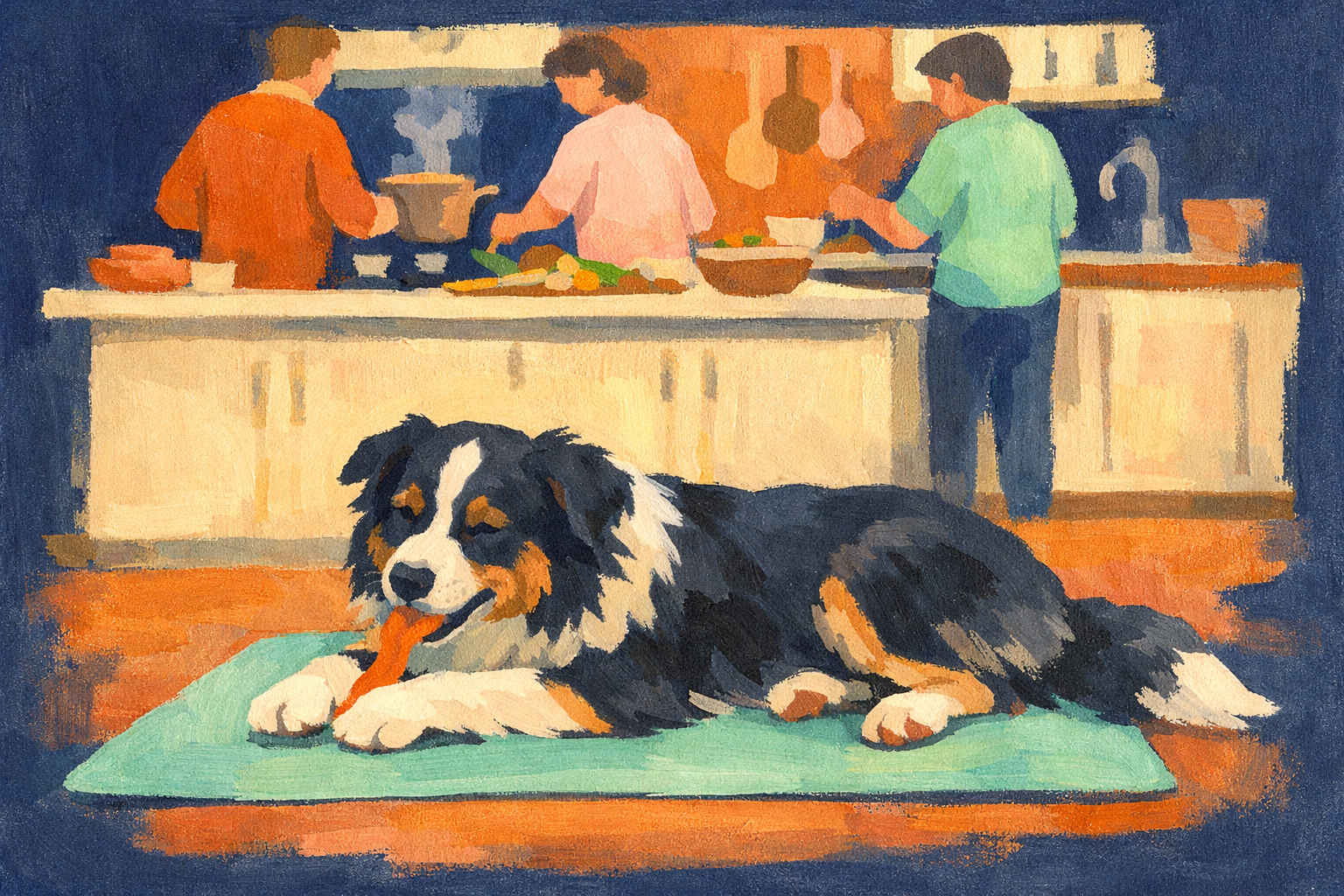
- A long-lasting chew or a stuffed, frozen food toy. Chewing and licking are self-soothing, and a frozen peanut butter toy can buy 20 to 40 minutes of calm. Add water, and a pee pad for small or senior pups.
- A sign on the door saying the dog is resting. Someone will try that handle looking for the bathroom.
Do a dry run two days ahead: 30 minutes in the room with the chew and white noise while you cook, so it means "nice nap" before it has to compete with a full house.
How do I rehearse the doorbell and arrival routine?
Teach one chain the week before: doorbell rings, dog goes to a mat or crate, dog gets something excellent there. Five minutes a day for a week changes the picture, because you are practicing when nobody is actually at the door.
The AKC's approach breaks the old association first, then rebuilds it. Show your dog a high-value treat, sound the doorbell while they are already licking or eating, and praise them through it, repeating until the sound predicts food instead of a stranger. Then add the destination: ring, lure to the bed, reward there, until the bell itself becomes the cue to go lie down.
What guest rules actually get followed?
Three, maximum, said out loud as people walk in. A group text sent the week before does not survive a doorway full of coats and casseroles.
- Nobody greets the dog at the door. Ignore them for ten minutes. If they want to say hello later, they will come to you.
- No food from the table or counter. One sentence beats a lecture: "They're on a special diet, please do not feed them anything."
- Watch the front door. The AVMA flags that dogs slip out while hosts collect coats, so put one person on door duty and confirm ID tags and microchip info are current.
When should I exercise my pup before guests arrive?
Aim for a sniff-heavy walk of 45 to 60 minutes ending roughly an hour before the first guest. Then feed the meal, then settle them in the quiet room. A tired, fed pup who has already had a bathroom break brings a smaller tank of energy to the noise.
Timing matters more than intensity. A hard run ten minutes before arrivals leaves a panting, revved-up dog who then gets hit with the doorbell. Favor sniffing over speed.
What do early stress signals look like in a crowded room?
Long before a growl, dogs leak smaller signals. The AKC lists whale eye, pinned ears, a tucked tail, lip-licking, yawning, panting, and looking away as common stress cues.
In a crowd, watch for drifting between rooms without settling, taking treats harder than usual, refusing food, hiding behind furniture, or shaking off as if wet. If two or three signals stack up, walk them to their room, hand them the chew, and close the door. If they growl, thank them. A growl is information, and punishing it removes the warning.
Where does a calming chew fit in the timeline?
A calming supplement is a pre-event tool, not a rescue tool. Give it 30 to 60 minutes before guests arrive, right after the walk and the meal, so it can take effect before the first ring. Handing one to a dog already pacing and barking asks a lot of it.
Look for ingredients with a track record for calm: chamomile, passion flower, valerian root, L-theanine, and melatonin. Finn's Calming Aid uses that combination in a soft chew. It will not override real fear of strangers, and if your pup takes medication, ask your vet first.
Given 30 to 60 minutes before guests arrive, a calming soft chew supports a settled state before the noise starts rather than after.
Shop Calming AidFor the room chew, pick something that lasts. A daily dental chew like Plaque Patrol does double duty, giving your pup a job while working on plaque and breath.
When is this a trainer or vet behaviorist situation?
If this only shows up twice a year when you host, the protocol above is usually enough. If your pup reacts to guests, delivery drivers, and visitors year-round, that is ongoing reactivity, and it needs a professional, not a better hosting plan.
Get help now, not in January, for any bite, snap, or air-snap at a person, lunging you cannot interrupt, or a dog who cannot settle for hours after people leave. Professionals advise addressing these patterns early, because rehearsed reactions get stronger with practice. Start with a certified, reward-based trainer, and move to a veterinary behaviorist if fear or aggression is involved. Your vet can also rule out pain, a common cause of a short fuse.
FAQ
Crate or whole room?
Whichever your pup already likes. A crate is great for a dog with crate history, rough on one who has never been crated.
How long can they stay in the quiet room?
Two to three hours suits most dogs, with a leashed potty break out a back door.
What if my dog loves people and I want them at the party?
Let them join, but build in breaks. Social pups get overtired too, and a 30-minute reset every couple of hours prevents a cranky night.
Can I start this the day of?
Partly. The room, exercise timing, guest rules, and calming chew all work same-day. Only the doorbell rehearsal needs a week of practice first.
This article is for general education and is not a substitute for veterinary advice. If your pup has ongoing or severe symptoms, check in with your vet.