


How to Protect Dog Paws From Road Salt and Ice Melt

Written by Finn Team · Published October 30, 2026 · Updated October 30, 2026
Rinse your pup's paws in lukewarm water after every winter walk, dry between the toes, and check the pads while you are down there. That 60-second habit clears road salt and ice melt residue before your dog licks it off. Balm, boots, and omega-3 support are the layers you add on top.
What exactly is the 60-second after-walk paw routine?
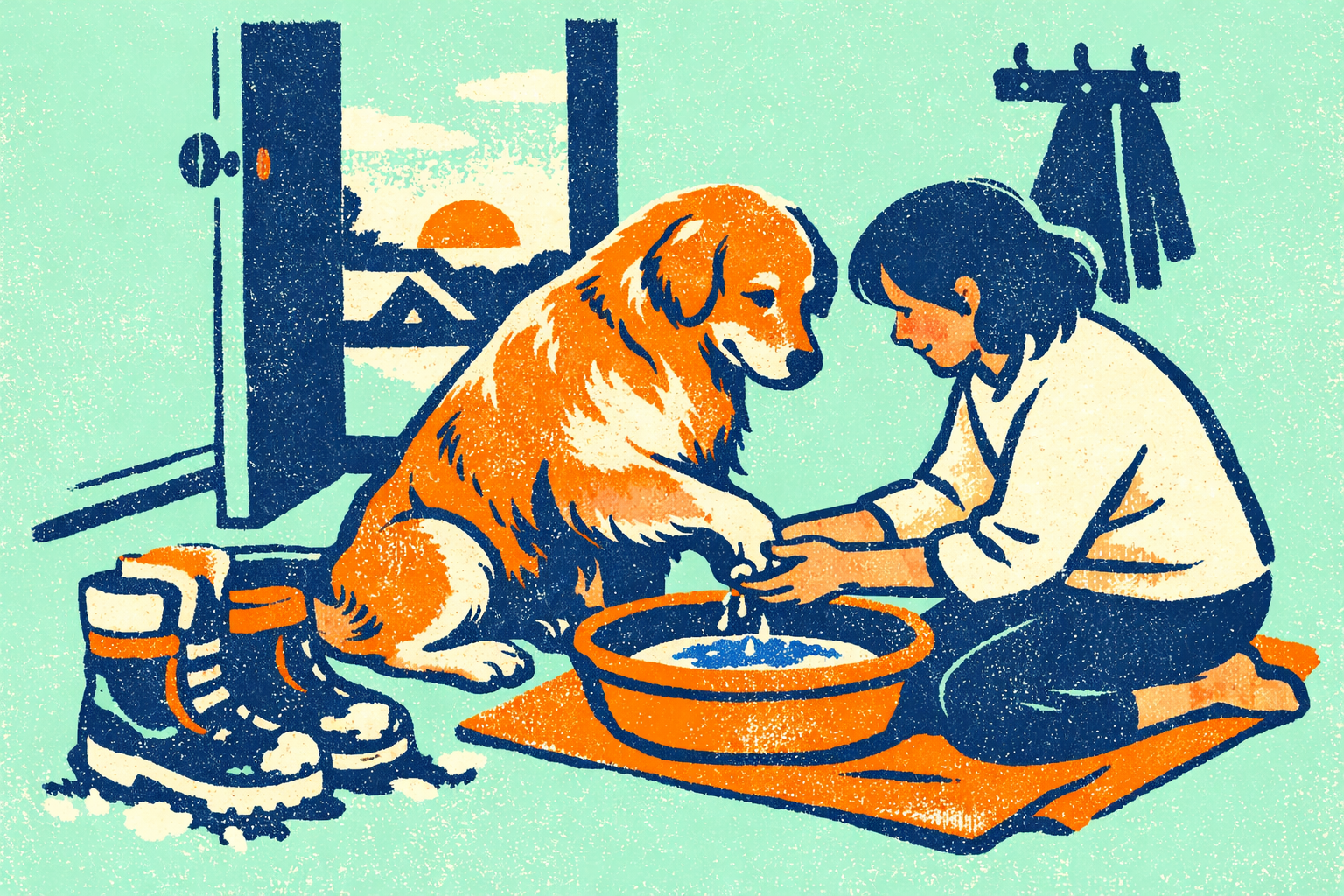
Keep a shallow basin or a squeeze bottle of lukewarm water and a microfiber towel by the door you come in through. Rinse each paw for about 10 seconds, spreading the toes so water reaches the webbing, then dry.
- Rinse, do not just wipe. Salt crystals wedge between the toes and in the fur around the pads, and a dry wipe pushes them deeper. Lukewarm water, never hot.
- Spread the toes. Fan each foot open and run a thumb through the webbing, where grit hides.
- Dry completely. Damp webbing invites irritation. Press, do not scrub.
- Look while you dry. The ASPCA suggests checking for cracks in the pads and redness between the toes every time you clean the feet (ASPCA winter paw tips).
- Balm last. A thin layer on clean, dry pads absorbs. A layer over salty, damp feet seals the mess in.
One pre-walk step makes this easier: keep the hair between the pads trimmed level with the pads. Long tufts collect snow that compacts into hard ice balls, and they hold salt long after the walk ends.
Why does it matter so much if my dog licks salty paws?
Because the paws are the delivery route. Most ice melts are built on sodium, potassium, magnesium, or calcium chloride, and a dog who grooms their feet on the way in swallows whatever came home.
Pet Poison Helpline notes that ice melts can stick in the feet and cause redness, cracking, or chapping, and that swallowing them can cause anything from an upset stomach to vomiting and neurologic signs like tremors (Pet Poison Helpline, winter hazards). A couple of licks off a damp sidewalk is usually minor. A dog who works over all four salty feet on the rug is worth a call to your vet.
Worth knowing: melts marketed as dog-safe are gentler, not harmless. They often swap chloride salts for urea, which can still upset a stomach. Rinsing is what does the work.
How do I tell salt irritation from plain dry-air cracking?
Salt irritation shows up fast, usually right after a walk, and involves the skin between the toes. Dry-air cracking builds over weeks and lives on the pad surface itself.
| Clue | Salt and ice melt irritation | Dry winter air |
|---|---|---|
| Timing | Minutes to hours after a walk | Gradual, over two to six weeks of cold |
| Where | Pink skin between the toes and at pad edges | Pad surface, rough and chalky with fine fissures |
| How many paws | Often one or two, whichever hit the treated patch | Usually all four, fairly evenly |
| Behavior | Frantic licking right after coming in, high-stepping | Low-grade licking, mostly at rest |
Licking that never stops is usually not weather. Year-round itchy feet point toward allergies rather than cold.
What do I do if my dog hates boots?
Boots are the most complete barrier there is. Most pups reject them because all four went on at once, right before a walk. Slow it down and many dogs come around within two weeks.
- Days 1 to 2: Boots on the floor. Your pup sniffs one, gets a treat.
- Days 3 to 4: One boot on one front paw, treats for five seconds, off before your dog reacts. Ending early is the whole trick.
- Days 5 to 7: Two boots, then four, for 30 seconds on carpet. Expect the goose-step walk, and toss a treat so your pup moves forward and forgets their feet.
- Week 2: Four boots for a short, happy trip to the mailbox, then off. Boots should predict good things.
Measure front and rear paws separately, since front feet are often wider, and check that the strap is snug enough that the boot cannot spin. If your dog truly will not tolerate boots, a pre-walk balm plus a thorough rinse covers most of the gap.
Where does a balm belong, and where do omega-3s fit?
Balm is a barrier and a repair tool: before walks it sits between the pads and the salt, and after the rinse it softens rough pads overnight. Omega-3s work from the inside, supporting skin barrier health over weeks rather than days.
Look for simple plant oils and waxes, and skip tea tree oil entirely. Apply a thin layer once the paws are dry, then run a short training session so it absorbs instead of being licked off. For winter-dry pads, this is where Paw Hero fits, with olive oil, avocado oil, chamomile, and aloe.
For pups whose skin turns dry and flaky every winter, a daily omega-3 chew supports the skin barrier from the inside while balm handles the surface.
Shop Skin & Coat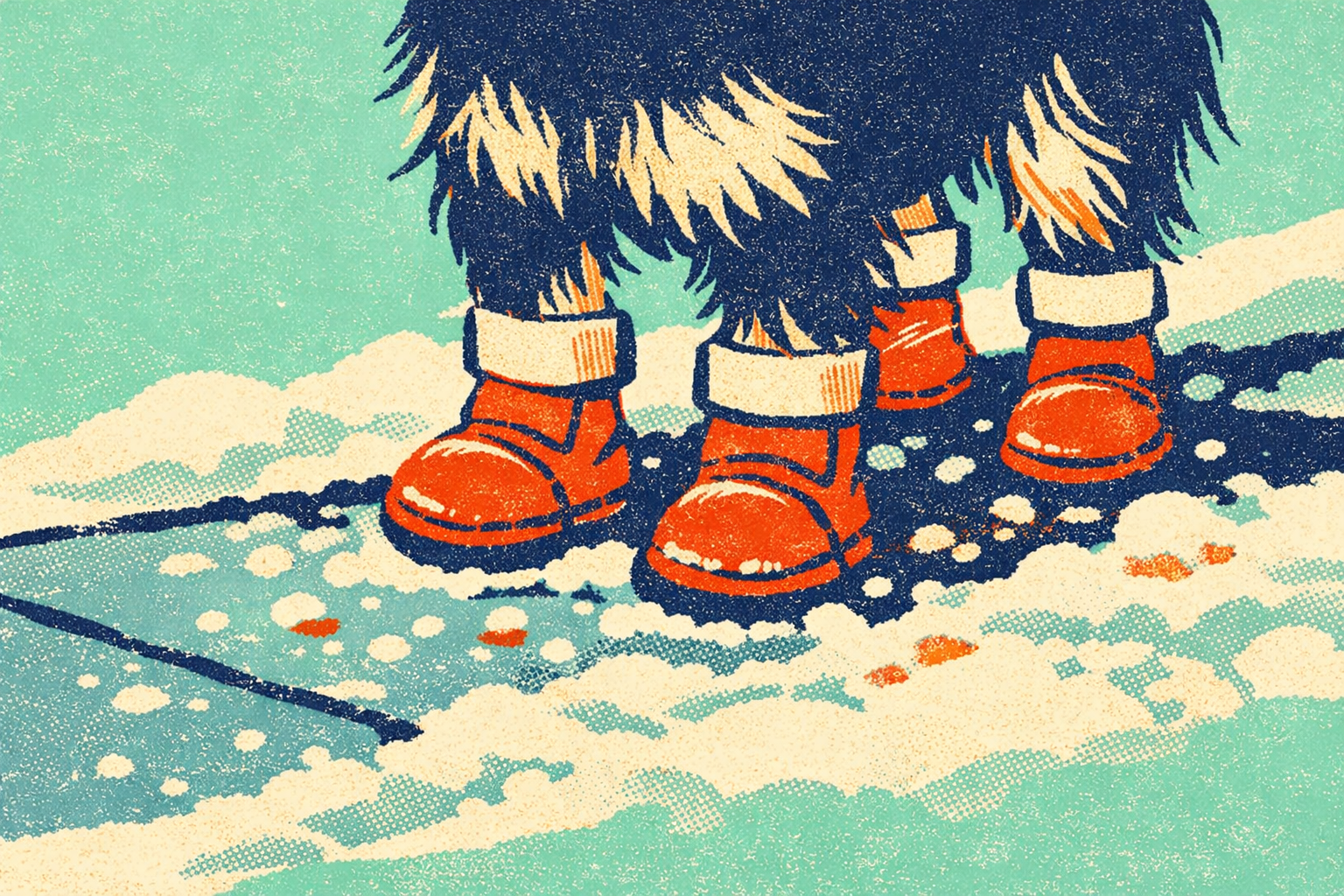
When do cracked paws mean a vet visit instead of a balm?
Balm is for dry, rough, intact pads. Once a pad is broken open it is a wound, and wounds on weight-bearing surfaces close slowly. Call your vet for:
- Bleeding, a loose flap of pad, or a raw, shiny red surface
- Limping past 24 hours, or refusing to put weight on a foot
- Swelling between the toes, discharge, or a sour smell
- Pale, white, or grey patches that stay hard and cold, a possible sign of frostbite
- Vomiting, drooling, wobbliness, or tremors after a snowy walk
Cold mornings are also hard on older joints, so a senior who hesitates at icy stairs may be stiff rather than sore-footed.
FAQ
Can I use baby wipes on my dog's paws?
Better than nothing in a pinch, but they smear residue rather than lift it, and many contain fragrance or alcohol that dries pads further. Water works better.
Is petroleum jelly safe on paw pads?
Some veterinary sources suggest massaging it into the pads before heading out as a barrier against salt. It is slippery on hardwood and most dogs lick some off, so many owners prefer a wax-based balm.
How cold is too cold for a walk?
Below about 20°F, keep outings short for most dogs, and shorter for small, thin-coated, senior, or very young pups. Lifted paws and a sudden turn toward home are your answer.
My dog ate an ice melt pellet off the floor. Now what?
Rinse the mouth, offer water, and call your vet or Pet Poison Helpline at (855) 764-7661 with the bag in hand. The active ingredient and your dog's weight decide how much it matters.
This article is for general education and is not a substitute for veterinary advice. If your pup has ongoing or severe symptoms, check in with your vet.