


School Starts Soon: Get Your Dog Ready to Be Home Alone

Written by Finn Team · Published August 6, 2026 · Updated August 25, 2026
Two weeks is enough runway if you start today. Practice short absences your pup barely notices, repeat the same low-key departure routine every time, and give the quiet hours a purpose with food puzzles and sniffing work. You are not teaching your dog to tough out an empty house. You are teaching them that the door closing is old news, and that it usually comes with something good.
How much time does a dog need to adjust to being home alone again?
Most dogs do well with one to two weeks of daily practice before the schedule flips. Veterinary guidance written for back-to-school season is consistent here: even gradual increases in alone time over one to two weeks can help sensitive dogs adjust more comfortably. Dogs with a real history of panic need longer, and need professional help alongside it.
The abrupt flip is the actual problem, not the alone time. The ASPCA lists an abrupt change in how long a dog is left alone among the situations associated with separation anxiety developing. A summer of kids home all day, followed by a Tuesday where everyone vanishes at 7:40 a.m., is that change in its purest form. Blur the line so there is no single dramatic morning.
What does the two-week August taper look like, day by day?
Work backward from the first bell. If school starts around August 20, you have roughly fourteen practice days. Keep each absence shorter than the time it takes your pup to get upset, then stretch from there.
| Dates | Practice absences | What you are building |
|---|---|---|
| Aug 6 to 9 | Three per day, 30 seconds to 10 minutes | Leaving is boring. Walk out, get the mail, come back with no fanfare. |
| Aug 10 to 12 | Two per day, 15 to 45 minutes | Move practice to the times the house will actually empty. |
| Aug 13 to 16 | One 90 minute to 2 hour absence, plus a short one | Long enough to finish the food toy and take a real nap. |
| Aug 17 to 19 | One 3 to 4 hour dress rehearsal | Everyone out the door on the school-morning timeline, backpacks and all. |
| Aug 20 onward | The real thing | Same ritual, same order, no extra goodbyes. |
If your dog already unravels while you gather your keys, spend the first few days there instead. Strip the meaning out of those cues by doing them without leaving: put on your coat and then watch TV, pick up your keys and then sit at the kitchen table, several times a day. Your pup has years of learning attached to that jingle, so it takes many repetitions.
What should our departure ritual actually be?
A good ritual is short, identical, and slightly dull. Same order, same words, same last step, every school day. A pup who can forecast what happens next has far less to brace for.
- Potty break first. Out and back, no lingering.
- Twenty to thirty minutes of real movement. A sniffy walk beats frantic fetch. In August, check the sidewalk with the back of your hand first, and see our guide on whether the pavement is too hot for your dog's paws.
- Water topped up, radio or a talk podcast on low if street noise sets your pup off.
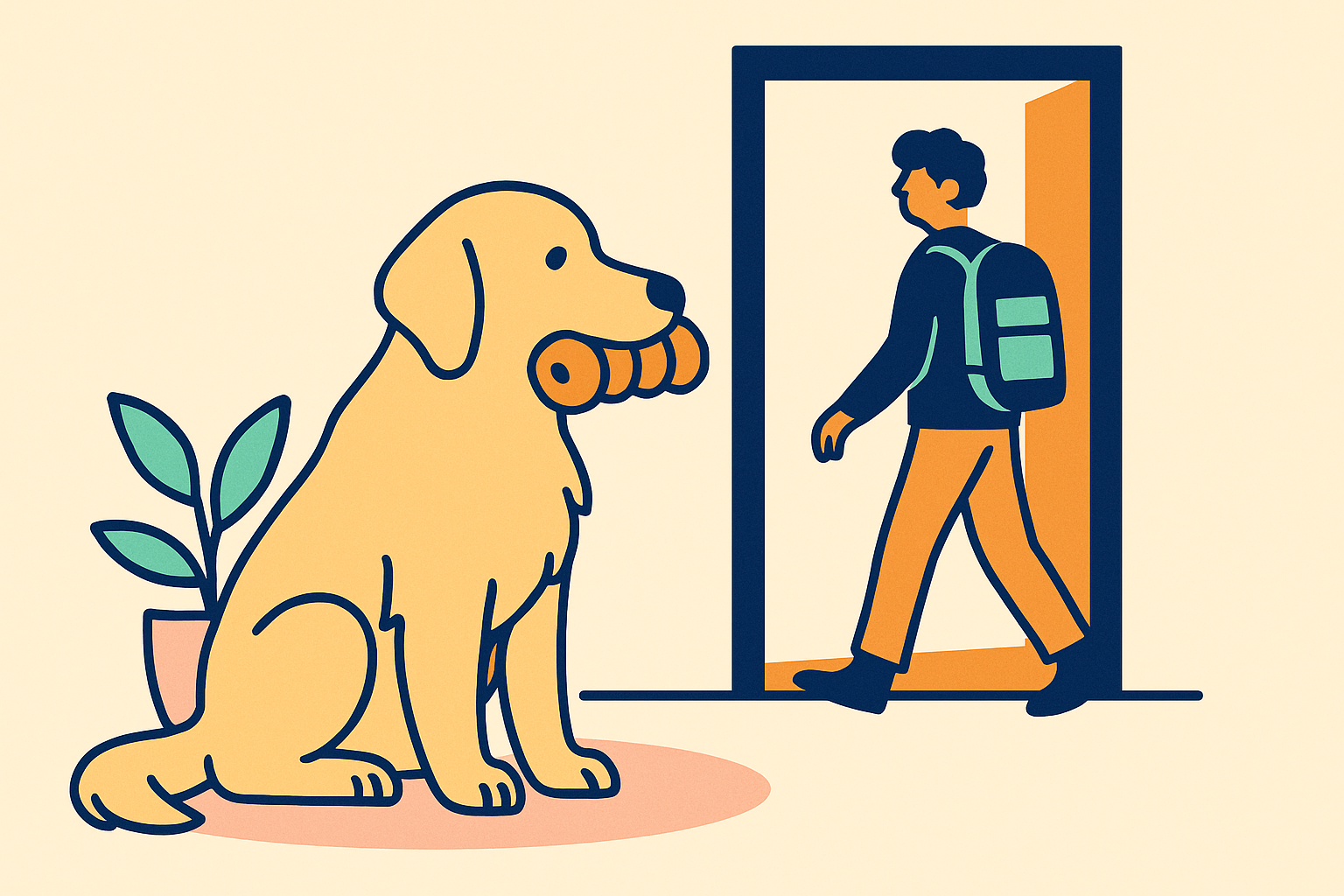
- Food toy handed over last, right as you reach for the door.
- No speech. Two words at most. Long emotional goodbyes give the departure weight it does not need.
- Calm homecoming. Hang up your bag, then greet. Put the food toy away so it stays special.
How do I give my dog a job during the quiet hours?
Replace the countdown with a task. Hand over a puzzle or stuffed rubber toy that takes at least 20 to 30 minutes to finish, and only offer it when your pup is alone. The sound of the door starts to predict the best snack of the day.
This is not busywork. Feeding dogs through toys instead of bowls has been linked to higher activity levels, and kenneled dogs given food toys bark less and stay more engaged than dogs without them. Dogs also seem to enjoy working for food rather than getting it free, an effect researchers nicknamed the "Eureka" effect.
- Frozen stuffed toy. Wet food or soaked kibble, frozen overnight. A scoop of Pumpkin Plus mixed in adds fiber and makes the filling stickier, so it lasts longer.
- Scatter breakfast. Toss half the morning kibble across the rug or a snuffle mat. Ten minutes of nose work, zero effort from you.
- Toy rotation. Keep six or seven, leave out three, swap weekly. Old toys feel new again.
- A worn t-shirt on the bed. Costs nothing, smells like you.
For pups who wind up during the first week of a new schedule, a chew with chamomile, L-theanine, and valerian root about 30 to 60 minutes before you head out can help take the edge off.
Shop Calming Aid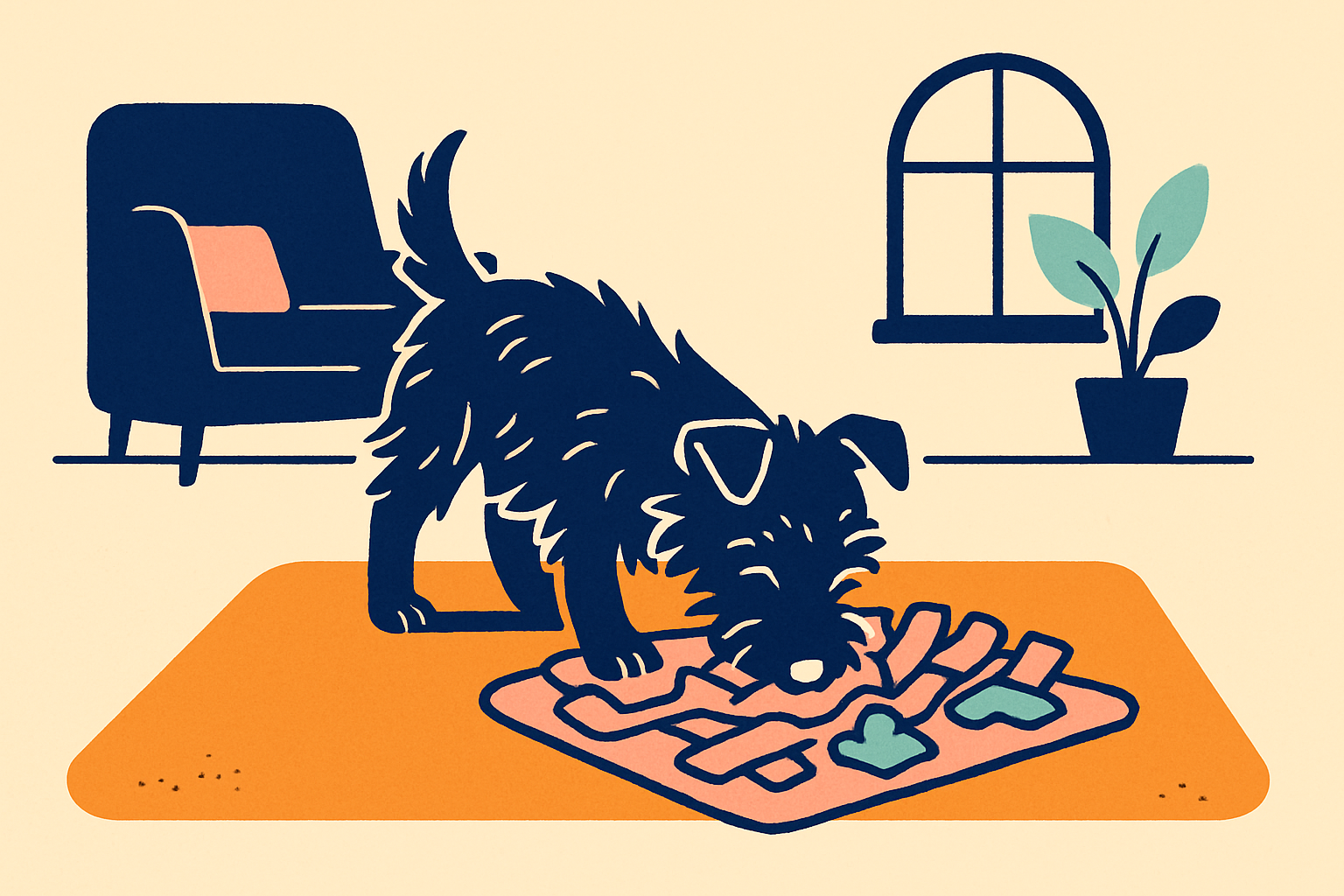
Is my dog bored, or is this real separation anxiety?
Boredom and distress look similar from the outside, and the plans are different. Bored dogs chew and dig while you are home too, and they do not look worried about it. Dogs in true distress show pacing, drooling, persistent howling, and escape attempts focused on doors and windows, often starting within minutes of your leaving.
Set a phone on a shelf and record the first thirty minutes. If your pup settles after ten minutes, keep tapering. If you see pacing, panting, and a dog who never touches the food toy, stop the DIY plan and call your vet, who can rule out medical causes and refer you to a veterinary behaviorist. Brushing up on reading your dog's body language helps you score that footage honestly.
FAQ
How long can my dog be alone during the school day?
Most healthy adult dogs manage four to six hours. Puppies and seniors need a midday break. If nobody is home until 3 p.m., a walker or a neighbor at lunchtime turns one long stretch into two manageable ones.
Should I get a second dog for company?
Usually not. Separation distress is about missing their people, so a new housemate rarely solves it and can add stress to an already busy month.
My dog follows me from room to room. Is that a warning sign?
On its own, no. Plenty of pups are natural shadows. Read up on why dogs follow you everywhere, then watch whether it comes with panting or whining when you head for the door.
Should I crate my dog while everyone is at school?
Only if the crate is already a place your pup chooses to nap. A dog who panics behind a closed door can injure themselves, so a puppy-proofed room or gated kitchen is often safer.
This article is for general education and is not a substitute for veterinary advice. If your pup has ongoing or severe symptoms, check in with your vet.