


What Actually Calms a Dog During Fireworks?

Written by Finn Team · Published October 23, 2026 · Updated October 23, 2026
No single thing calms a dog during fireworks. What works is layering: a quiet, enclosed safe space your pup cannot bolt from, steady sound masking, a snug wrap or pheromone, and (for mild to moderate nerves) a calming supplement given 30 to 60 minutes ahead. If your pup is already in full panic, clawing at doors, shaking for hours, or having stress diarrhea, skip the chew aisle and call your vet. That level of fear needs prescription help.
What actually calms a dog during fireworks?
Think in layers. Environment does the most work, wraps and pheromones add a little, and supplements sit on top for dogs whose fear is mild to moderate. Each layer is small alone. Stacked, they add up.
Noise aversion is not a quirk or bad manners, it is genuine distress, and veterinary coverage of the problem notes that when a dog struggles through fireworks season, the whole household struggles too. Treat it like the real condition it is and you get a real plan.
What should a fireworks safe space look like?
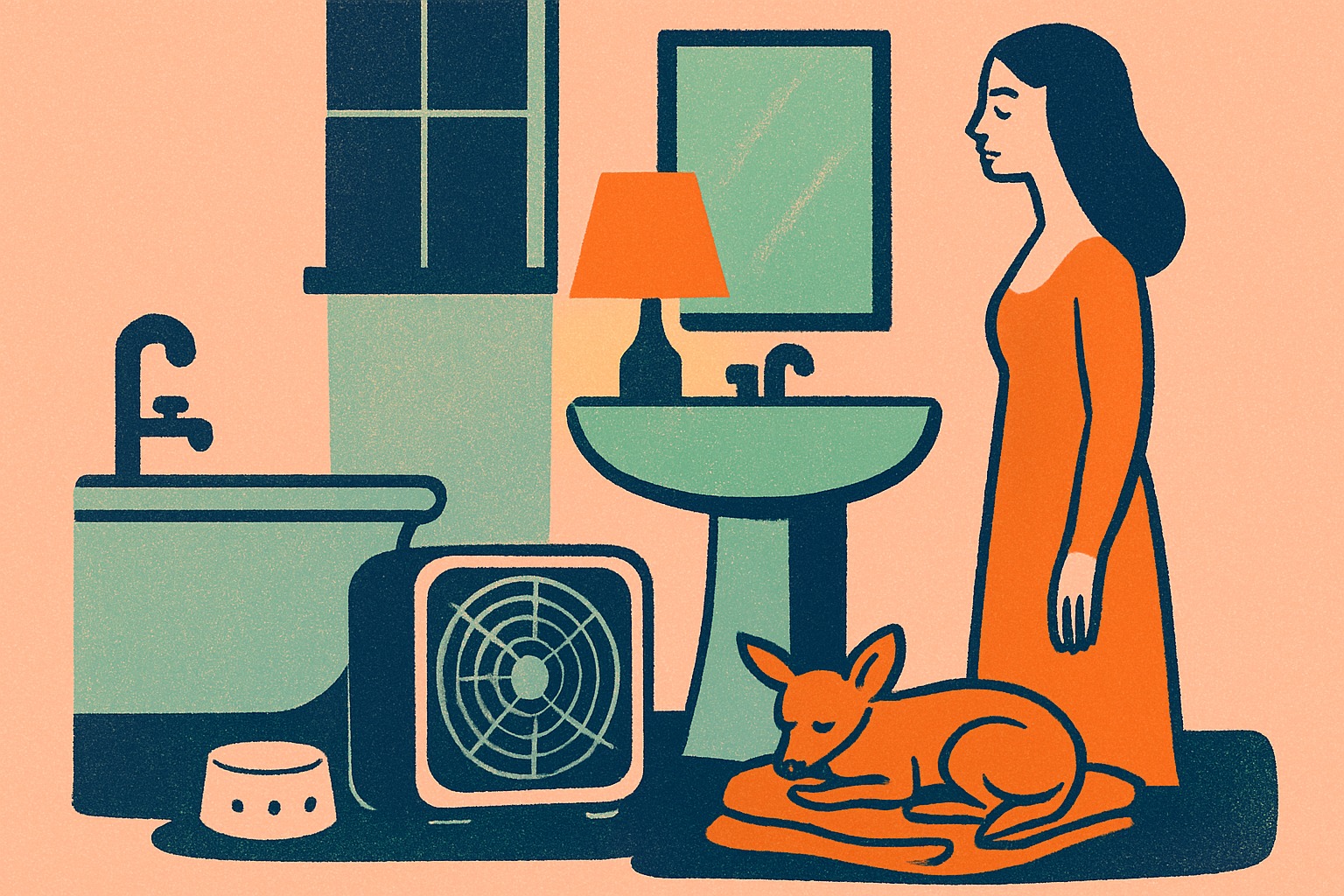
Pick the most interior, least windowed room you have: a bathroom, closet, or basement corner. Add your pup's bed or a blanket that smells like you, close the blinds, and run a box fan, white noise machine, or the TV to blunt the sharp edge of each boom.
- Let your dog choose. If your best bud already crams under the bed during storms, make that spot comfortable instead of moving them somewhere "better."
- Crates only if the crate is already a happy place. A covered crate muffles sound nicely for a crate-trained pup, but fireworks night is the worst possible time to introduce one.
- Secure every exit. Cornell's veterinary college notes that frightened dogs may frantically try to escape outside, which is how pups end up lost or hurt. Lock the dog door, latch gates, and confirm ID tags and microchip info are current.
- Potty break early. Go out on a leash before dusk, even in a fenced yard. A panicked dog can clear a fence they have respected for years.
Leave a frozen lick mat or stuffed Kong in there too. Licking and chewing are settling behaviors.
Do pressure wraps and pheromones actually help?
Sometimes, and modestly. Snug anxiety vests and dog appeasing pheromone diffusers both have mixed research behind them, with some dogs clearly calmer and others unchanged. Both are low risk and worth trying, just not as the whole plan.
Fit a wrap snugly, like a firm hug, never tight enough to change your pup's breathing, and put it on 15 to 30 minutes early so it does not become a signal that scary things are coming. Pheromone diffusers do best plugged into the safe room a day or two ahead.
Which calming supplement ingredients have real evidence?
The ingredients with the most behind them are L-theanine, chamomile, passion flower, valerian root, and melatonin. The research is mostly small studies and owner-reported outcomes, which is worth saying plainly: these can take the edge off mild to moderate nerves, and they are not sedatives or stand-ins for a prescription.
- L-theanine: an amino acid from green tea, studied for easing anxious behaviors around predictable stressors like storms and strangers.
- Chamomile and passion flower: traditional calming botanicals with a long safety record and gentle effects.
- Valerian root: used for situational stress, usually paired with other botanicals.
- Melatonin: most useful for noise-related restlessness. Dose by weight with your vet's input, especially if your pup is on other medication.
Claims worth ignoring: "instant calm," results in five minutes, "hemp" labels where the only hemp is hemp seed oil, and proprietary blends that hide milligram amounts. If a label will not show how much of each active is in the chew, you cannot judge whether it is a real dose.
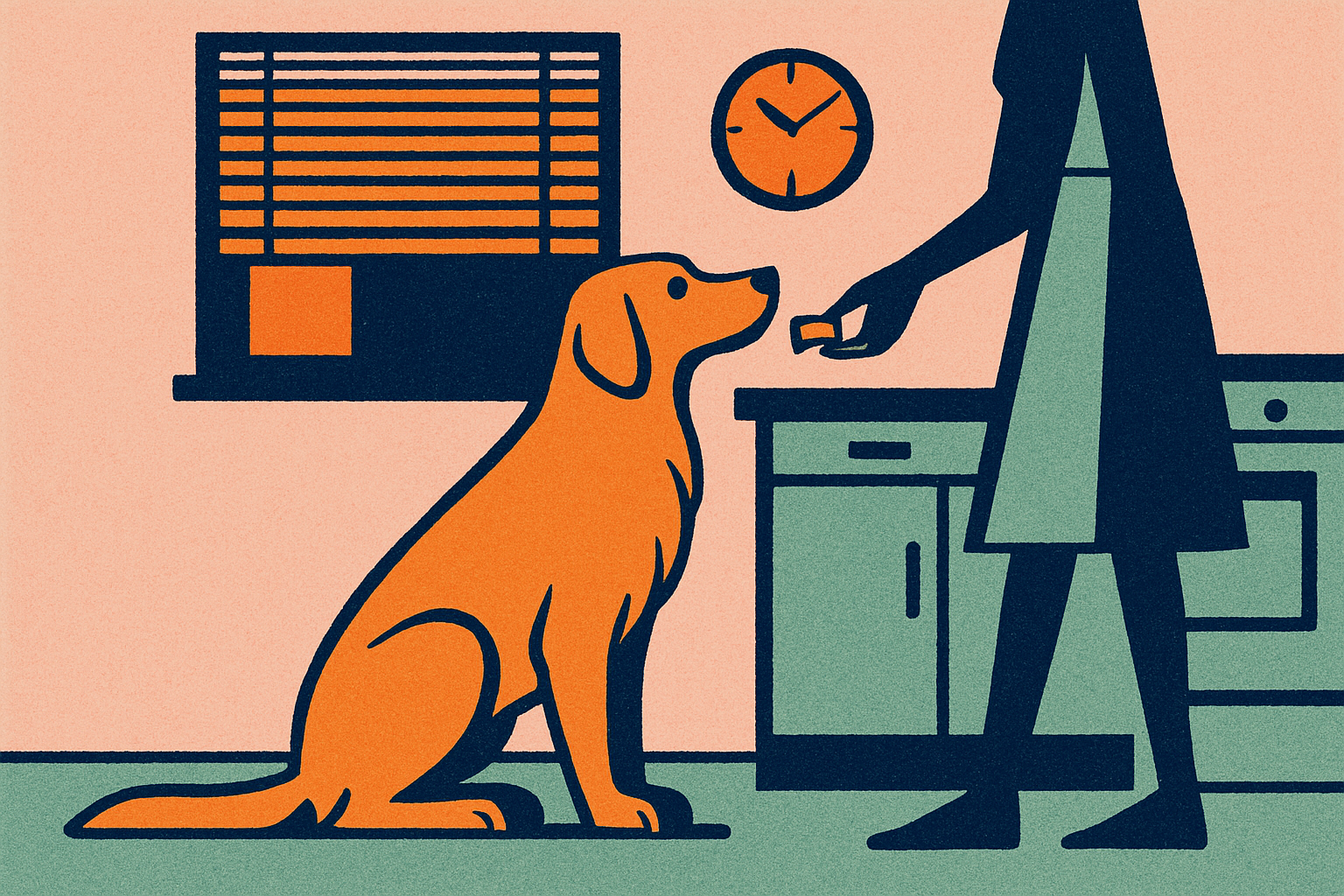
Timing matters as much as the ingredient list. Most calming chews need 30 to 60 minutes, so give one before the neighborhood starts up, not after your pup is hiding behind the toilet. Trial a new chew on a quiet night first.
Finn's Calming Aid pairs L-theanine, chamomile, passion flower, valerian root, and melatonin in a soft chew made to support calm 30 to 60 minutes before fireworks, travel, or vet visits.
Shop Calming AidOne myth to retire: Benadryl is not an anti-anxiety medication. It makes some dogs drowsy, and drowsy is not calm.
When does my dog need a vet instead of a chew?
If your pup shows panic rather than nerves, a supplement is the wrong tool. Panic looks like destructive escape attempts (chewing door frames, scraping at windows), self-injury such as torn nails or bloody paws, drooling and trembling that does not settle after the noise stops, stress diarrhea, or dread that starts days before the Fourth.
Those pups have options. Sileo (dexmedetomidine oromucosal gel) is FDA-approved specifically for noise aversion in dogs, given between the cheek and gum. Trazodone is widely prescribed for situational anxiety. Gabapentin is often layered alongside it, and dogs anxious year-round may benefit from a daily medication plus a behavior plan.
Cornell advises talking with your vet about anti-anxiety medication well in advance and trialing it on a calm day first, so you know how your dog responds before the night that counts. Between holidays, ask about desensitization with recorded firework sounds. The volume should be low enough that your dog notices but shows no stress signs like panting or pacing. Above that threshold, no learning happens.
FAQ
Will comforting my dog make the fear worse?
No. Fear is an emotion, not a trained behavior, so you cannot reinforce it with affection. Sit nearby, speak normally, and offer contact if your pup seeks it.
How far ahead should I give a calming chew?
Usually 30 to 60 minutes before the noise starts. For a long evening of neighborhood fireworks, give it before dusk instead of waiting for the first boom.
Should I do anything different the morning after?
Walk your yard before letting your pup outside. ASPCA recommends checking for firework debris before your dog has access again. Keep the safe room available in case lingering stress carries into the next day, and watch for signs like skipped meals or unusual clinginess.
Can I go out and leave the TV on?
If your dog has real noise sensitivity, stay home or have someone familiar there.
Do dogs grow out of firework fear?
Rarely on their own. Noise fear left unaddressed tends to intensify each season, which is why starting the layered plan early matters.
This article is for general education and is not a substitute for veterinary advice. If your pup has ongoing or severe symptoms, check in with your vet.