


What Can I Give My Senior Dog for Stiff Joints?

Written by Finn Team · Published October 8, 2026 · Updated October 8, 2026
If your senior pup's stiffness came on suddenly, or they are limping, holding a leg up, or yelping, that is a vet visit now, not a supplement question. For the slow, creaky, takes-a-minute-to-get-going stiffness that builds over months, what helps most is weight management, gentle daily movement, traction and warmth at home, and a vet plan for pain. Supplements sit alongside all of that: omega-3s have the strongest evidence, green-lipped mussel and UC-II collagen look promising, and glucosamine and chondroitin are weaker than their reputation.
Is my dog's stiffness an emergency?
Chronic arthritis stiffness is gradual, worse after rest and better after a few minutes of walking. Anything sudden, painful, or clearly one-sided deserves a same-day exam.
- Non-weight-bearing lameness. Your pup will not put the foot down at all.
- Sudden onset. Fine at breakfast, limping by dinner, with no slow build-up.
- Yelping, panting, or trembling when they move or when you touch a joint.
- A hot, swollen, or misshapen joint, or a leg that hangs oddly.
- Dragging a back paw or crossing the rear legs, which points toward a spinal problem rather than a joint one.
- Stiffness plus fever, appetite loss, or sudden lethargy.
Sudden hind-limb lameness in an older dog is often a torn cruciate ligament, not arthritis. Bone tumors and tick-borne disease can look similar. An exam, and often an X-ray, is the only way to sort it out.
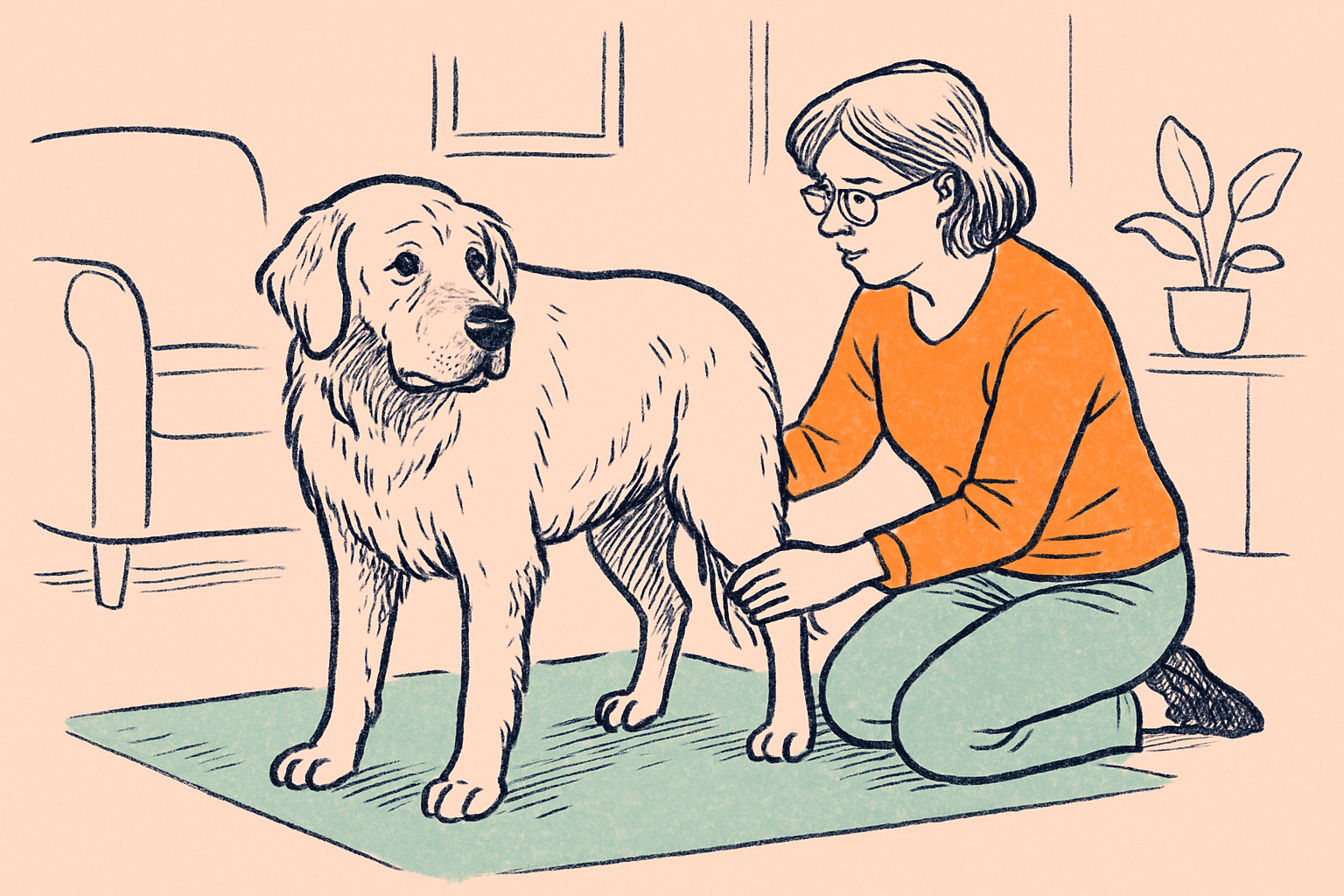
What helps day-to-day stiffness the most?
The highest-impact changes are free or close to it, and they beat anything in a jar. Focus on four levers: weight, movement, traction, and warmth.
1. Get the weight off
Every extra pound loads every arthritic joint on every step. In one study of obese dogs with osteoarthritis, lameness measurably improved after a loss of roughly 6 to 9 percent of body weight. For a 70-pound Lab, that is about 5 pounds. Ask your vet for a target weight, then measure meals with a kitchen scale.
2. Keep them moving, just differently
Rest is not the answer, because joints stiffen without movement. Trade one long weekend hike for several short, flat walks of 10 to 20 minutes on soft footing. Swimming suits dogs who struggle on land. If your pup is sore the next day, scale back by a third.
3. Fix the floors
Hardwood and tile are tough on a dog with a weak back end. Run cheap runners or yoga mats along main paths, keep the hair between pads trimmed, and keep nails short, since long nails change how the foot loads. Cracked pads also reduce grip, so a little Paw Hero balm helps.
4. Bedding, ramps, and warmth
An orthopedic foam bed (not a pillow bed) off the cold floor makes mornings easier. Add a ramp or sturdy steps for the car and couch, and block stairs if your pup is unsteady. Cold weather stiffens most seniors, so add a sweater on winter walks and keep bedding away from drafts.
Which joint supplement ingredients actually have evidence?
Here is an honest grading based on what has been measured in dogs, because human research does not always translate.
| Ingredient | Evidence in dogs | What to know |
|---|---|---|
| Omega-3s (EPA and DHA from fish oil) | Strongest | Owner-rated rising, playing, and walking improved at 6 to 24 weeks on high-dose EPA and DHA diets. |
| Green-lipped mussel | Emerging, encouraging | Several trials show benefit in mild to moderate joint disease. |
| Undenatured type II collagen (UC-II) | Emerging | Small dog trials show lower pain and lameness scores; pooled data call the effect modest. |
| Glucosamine and chondroitin | Modest to disappointing | Pooled data in dogs show little to no pain benefit, despite being the best-known combo on shelves. |
| Turmeric, MSM, boswellia | Early | Plausible support, mostly studied inside blends. |
Two details matter. The omega-3 benefit came from EPA and DHA at therapeutic levels, more than a general wellness chew provides, so ask your vet for a target in milligrams. The glucosamine picture is genuinely unflattering: a 2022 meta-analysis of joint nutraceuticals in dogs and cats found only a weak effect for collagen and concluded glucosamine and chondroitin should no longer be recommended for pain management. A 2024 review of non-drug options is warmer on green-lipped mussel in mild to moderate cases.
That does not make a blended joint chew pointless, but expect steady support over weeks, not a transformation.
Finn's Hip & Joint soft chew pairs green-lipped mussel and turmeric (the ingredients with the most encouraging data) alongside glucosamine, chondroitin, and MSM for daily mobility support.
Shop Hip & Joint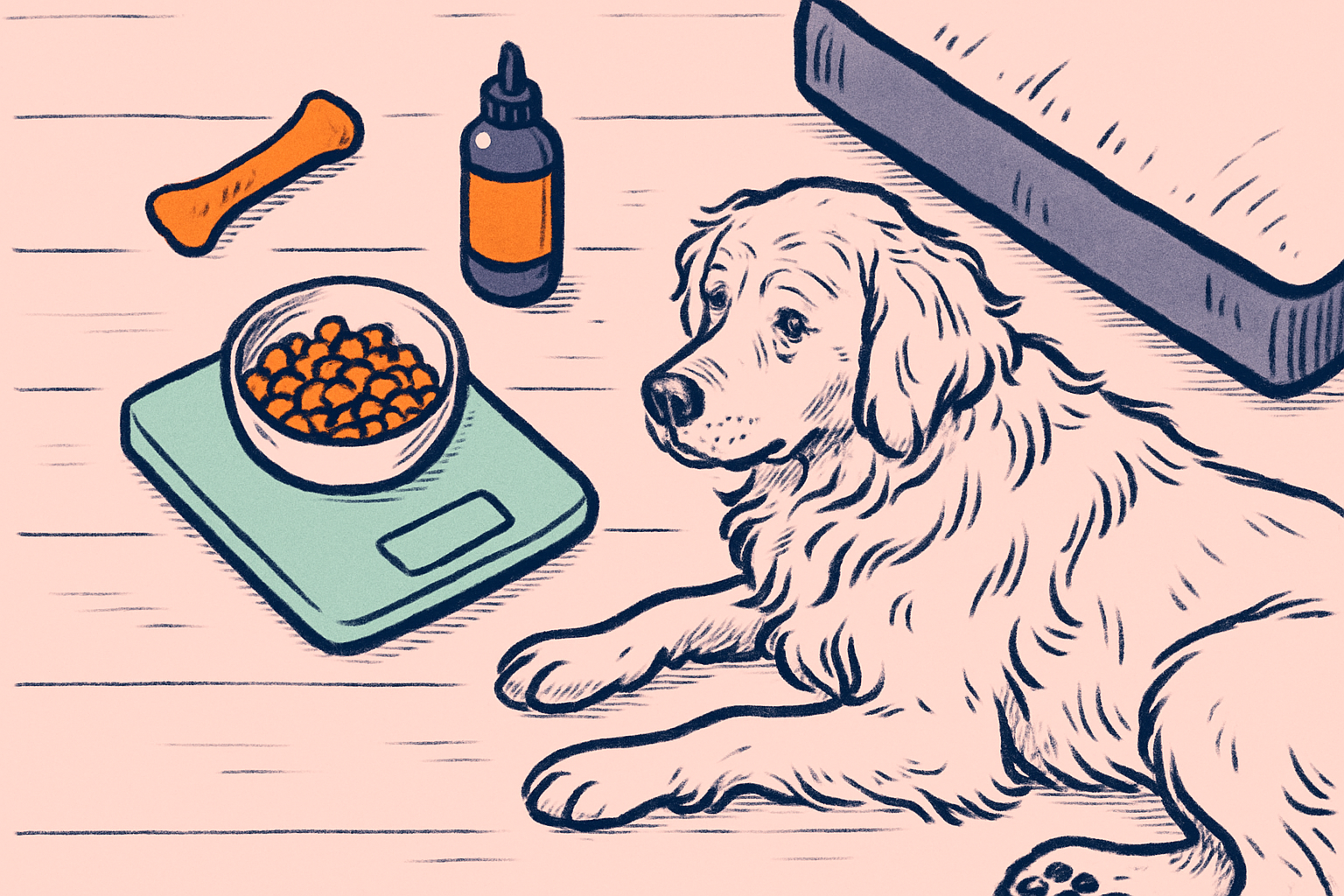
Do supplements replace arthritis medication from the vet?
No. Supplements are adjuncts. If your vet diagnoses osteoarthritis and your pup is in pain, pain control comes from medication and the supplement rides alongside it. Options your vet may raise include veterinary NSAIDs (completely different from human ibuprofen or naproxen, which are toxic to dogs), monthly anti-nerve-growth-factor injections, and polysulfated glycosaminoglycan injections.
Dogs on long-term medication still benefit from weight management, exercise, and omega-3s. Never add a human pain reliever on your own, and tell your vet every supplement your pup takes.
How long until I see a difference?
Home changes work fastest: traction, bedding, and a ramp can change how your dog moves the same week. Weight loss shows up over 8 to 16 weeks. Supplements need 4 to 8 weeks of daily dosing before you judge them.
Track something concrete: stairs, getting into the car, or how far before they want to stop. A short walking video every two weeks is the most useful thing to bring to a recheck.
FAQ
Can I give my senior dog aspirin or ibuprofen for stiff joints?
No. Ibuprofen, naproxen, and acetaminophen can cause ulcers and kidney damage in dogs, and aspirin can complicate starting a prescription NSAID later. Call your vet for a dog-specific option.
Is fish oil enough on its own?
It has the best evidence of the supplement options, but for diagnosed arthritis pain it is a supporting player, not a pain medication. Joint-level doses can loosen stool, so build up gradually and confirm the dose with your vet.
Should an arthritic dog rest more or walk more?
More frequent, shorter, lower-impact movement. Long rest stiffens joints and weekend-warrior bursts make dogs sore, so several 10 to 20 minute flat walks beat one long outing.
My dog is only stiff in the morning. Is that still arthritis?
Often yes. Stiffness that is worst after rest and eases within 10 or 15 minutes of moving is a classic early pattern. Raise it at your next exam rather than waiting for a limp to appear.
This article is for general education and is not a substitute for veterinary advice. If your pup has ongoing or severe symptoms, check in with your vet.