


Why Does My Dog Get an Upset Stomach Every Time We Travel?

Written by Finn Team · Published August 10, 2026 · Updated August 25, 2026
Travel tummy is rarely one thing going wrong. It is usually three at once: the stress of a long drive, water from an unfamiliar tap or a lake, and road snacks that never show up at home. Your pup's digestive system runs on a predictable routine, and a road trip scrambles all of it in one afternoon. The fix is preparation that starts three to five days before you leave, not damage control on day two at the rental.
Why does my dog get an upset stomach every time we travel?
Because travel changes routine, water, and food at the same time, and the gut is the first place that shows it. Stress alone shifts how quickly food moves through the intestines, which is why soft stool often shows up within a day of leaving. Add a new water source and a handful of new treats, and you have stacked three triggers at once.
The American Kennel Club notes that emotional stress from boarding, moving, or traveling can disrupt the balance of bacteria in a dog's gut and lead to colitis and loose stool. That is not a sign your pup is fragile. It is a normal, predictable response to a big change, which is exactly what makes it manageable.
1. Routine gets scrambled
Meals slide three hours later, potty breaks happen on someone else's schedule, and sleep gets broken up by highway noise. Dogs who are already sensitive to change, the ones who shadow you from room to room, feel this the most.
2. The water changes
Tap water varies by region, and many dogs drink less of it at first, then gulp a lot at once. Natural water is the bigger concern. Cornell's Riney Canine Health Center points out that Giardia is picked up from contaminated water, soil, and food, and that just a few ingested cysts can cause infection. A lake swim with a lot of drinking is a real risk.
3. The snacks drift
This is the quiet one. A gas station jerky stick, a bite of burger at the picnic table, plus grandma's helpful scraps. Abrupt diet changes are a very common cause of vomiting and diarrhea in dogs, and vacation is when the rules get loosest.
When should I start gut support before a trip?
Three to five days before departure, not the morning you leave. The AKC suggests giving a probiotic a few days ahead of a known stressful event like boarding or travel, rather than waiting for symptoms. Starting early gives the good bacteria time to establish before the stress arrives.
Our Digestive Probiotics chew pairs multi-strain probiotics with prebiotic pumpkin to help maintain healthy digestion and firmer stools. Give one daily starting the week of the trip, keep it going on the road, and continue for several days after you get home, since coming back is its own routine change.
What should I pack to keep my dog's stomach steady?
Pack for consistency. The goal is that your pup's digestive day on the road looks nearly identical to their day at home.
- Their exact food, plus 3 extra days. Measure each meal into its own bag so portions do not drift. Running out and buying whatever the local store carries is the classic cause of vacation diarrhea.
- A gallon or two of water from home. Use it straight for the first day, then mix half and half with local water on day two, and switch over by day three.
- The same treats you use at home, enough that you are not tempted by the checkout counter.
- A collapsible bowl and a set feeding time. Feed at the usual clock time, shifting for time zones over a day or two rather than all at once.
- A fiber topper. Pumpkin Plus adds pumpkin and psyllium to a meal to help support regularity when everything else is unusual.
- Poop bags, wipes, and an old towel. Assume one accident and you will be glad.
How do I handle the drive itself?
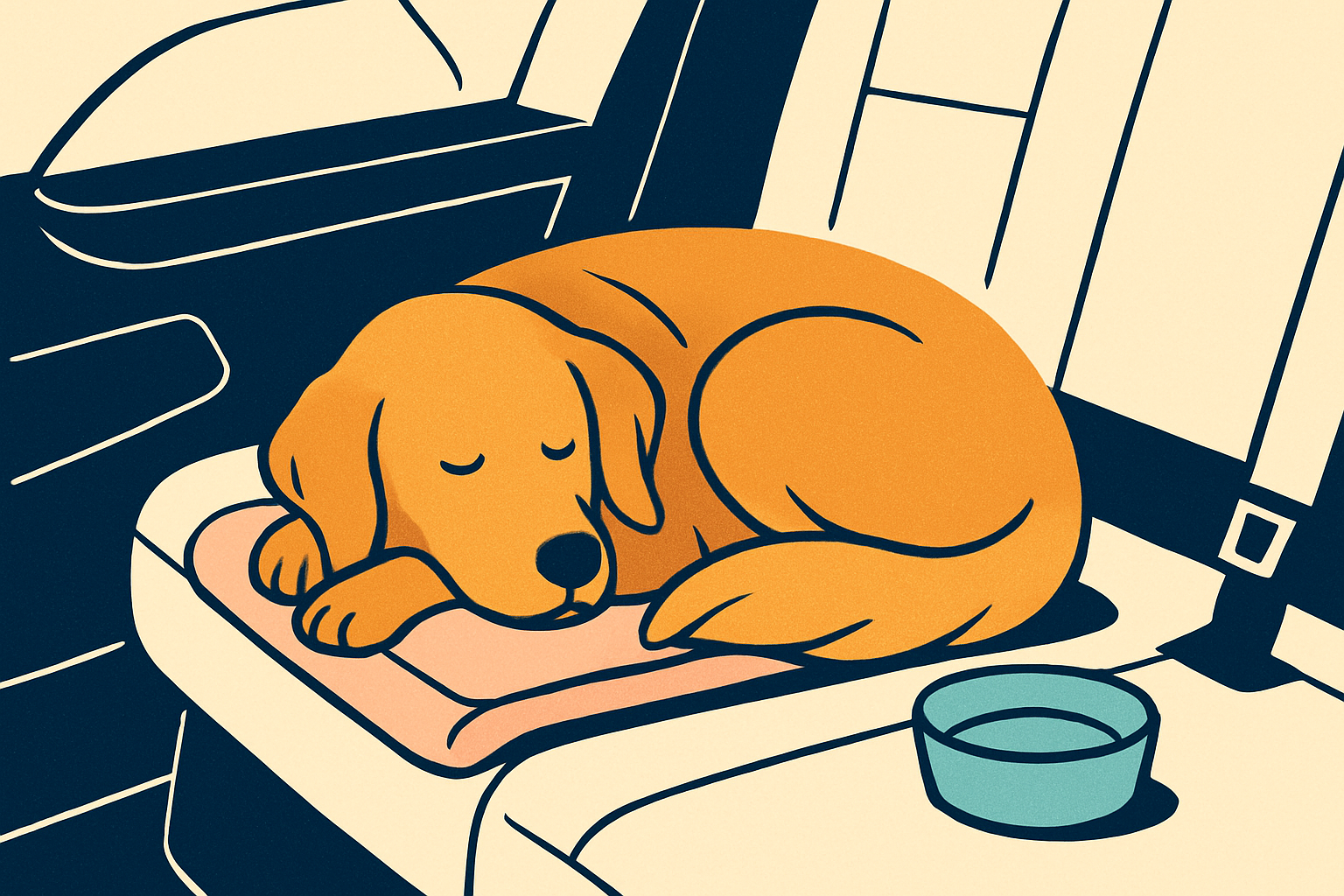
Feed a normal meal three to four hours before you leave so your pup travels on a settled stomach rather than a full one. The AKC recommends keeping the car cool, lowering the windows for fresh air, and limiting food and water for a few hours before the trip, plus about twenty minutes of exercise beforehand.
Stop every two to three hours and offer a little water each time rather than a huge bowl at hour six. Walk on grass, in shade, and check the ground temperature first, because August rest-stop asphalt gets hot enough to hurt paw pads. Grazing at every stop is common and usually harmless, though frantic grass eating can go along with a queasy stomach.
For pups whose travel stomach is really a nerves problem, calming support given 30 to 60 minutes before you load the car can take the edge off.
Shop Calming Aid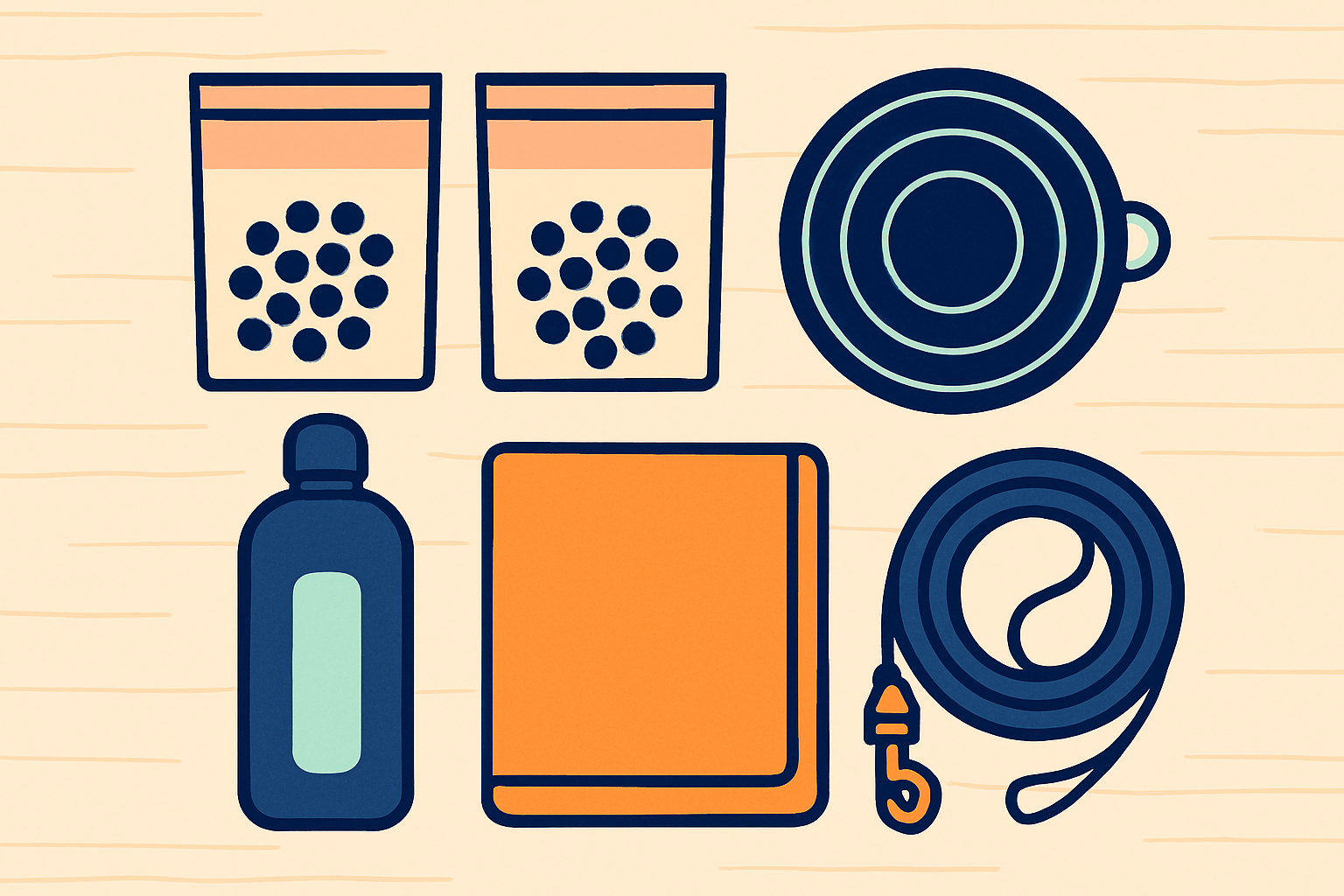
What if the upset stomach starts anyway?
Soft stool that firms up within 24 to 48 hours while your pup stays bright, hungry, and drinking is usually travel stress settling itself. Keep meals small and on schedule, keep water available, and hold off on adding anything new.
Call a vet for diarrhea lasting more than 48 hours, blood in the stool, repeated vomiting, refusing water, a painful or bloated belly, pale gums, or real lethargy. Puppies, seniors, and pups with existing health conditions dehydrate faster, so shorten that window for them. Foul-smelling, mucus-streaked diarrhea after a lake swim is worth a stool sample, since Giardia is diagnosed by a fecal test and is treatable.
FAQ
Should I feed my dog before a long car ride?
Yes, but earlier than usual. A normal-sized meal three to four hours before departure is easier on the stomach than food right before you pull out, and much better than skipping meals entirely.
How long does a probiotic take to work in dogs?
Some pups show firmer stools in a few days, others take a couple of weeks of daily use. That timeline is exactly why starting before the trip matters more than starting after the first bad morning.
Is it stress or motion sickness?
Motion sickness usually shows up during the drive as drooling, lip licking, and vomiting. Stress-related gut upset tends to appear as loose stool hours later, once you have arrived, and can last through the first day or two of the trip.
My dog is fine in the car but gets diarrhea at the rental. Why?
That points at routine and environment rather than motion. New smells, different sleep, a changed feeding time, and new water all land at once. Keeping meal times and food identical usually shortens it.
This article is for general education and is not a substitute for veterinary advice. If your pup has ongoing or severe symptoms, check in with your vet.