


Why Does My Dog Get Diarrhea Every Time We Board Them?

Written by Finn Team · Published November 5, 2026 · Updated November 5, 2026
Most boarding diarrhea is stress colitis, a short-lived irritation of the large intestine that flares when a pup's routine, sleep, and food all change on the same day. Holiday stays add a packed facility and a busy house at the other end. It is largely preventable: start gut support a week before drop-off, send their own food pre-portioned, and protect a quiet 48 hours after pickup.
Why does my dog get diarrhea every time we board them?
Because the colon reacts fast to stress. When it is inflamed, the colon contracts faster and more forcefully, and the AKC describes the result as urgency, cramping, and diarrhea. Stress is a common trigger, and this kind of sudden colitis usually clears on its own.
The classic picture: frequent small puddles rather than one big accident, straining at the end, often with mucus and sometimes a streak of bright red blood, in a pup who is otherwise bright and still asking for dinner.
Is it the stress, or is it the food?
Almost always both. Stress primes the gut, then small changes finish the job.
- New water and bowl, and usually less drinking on day one
- Facility kibble, or the same kibble at new times
- Broken sleep from barking, lights, and shift changes
- Longer gaps between potty breaks, then a rush of excitement at playtime
Food is the variable you fully control, so control it. A diet change alone can soften stool for days, and layering one onto a stressful week is close to a guarantee.
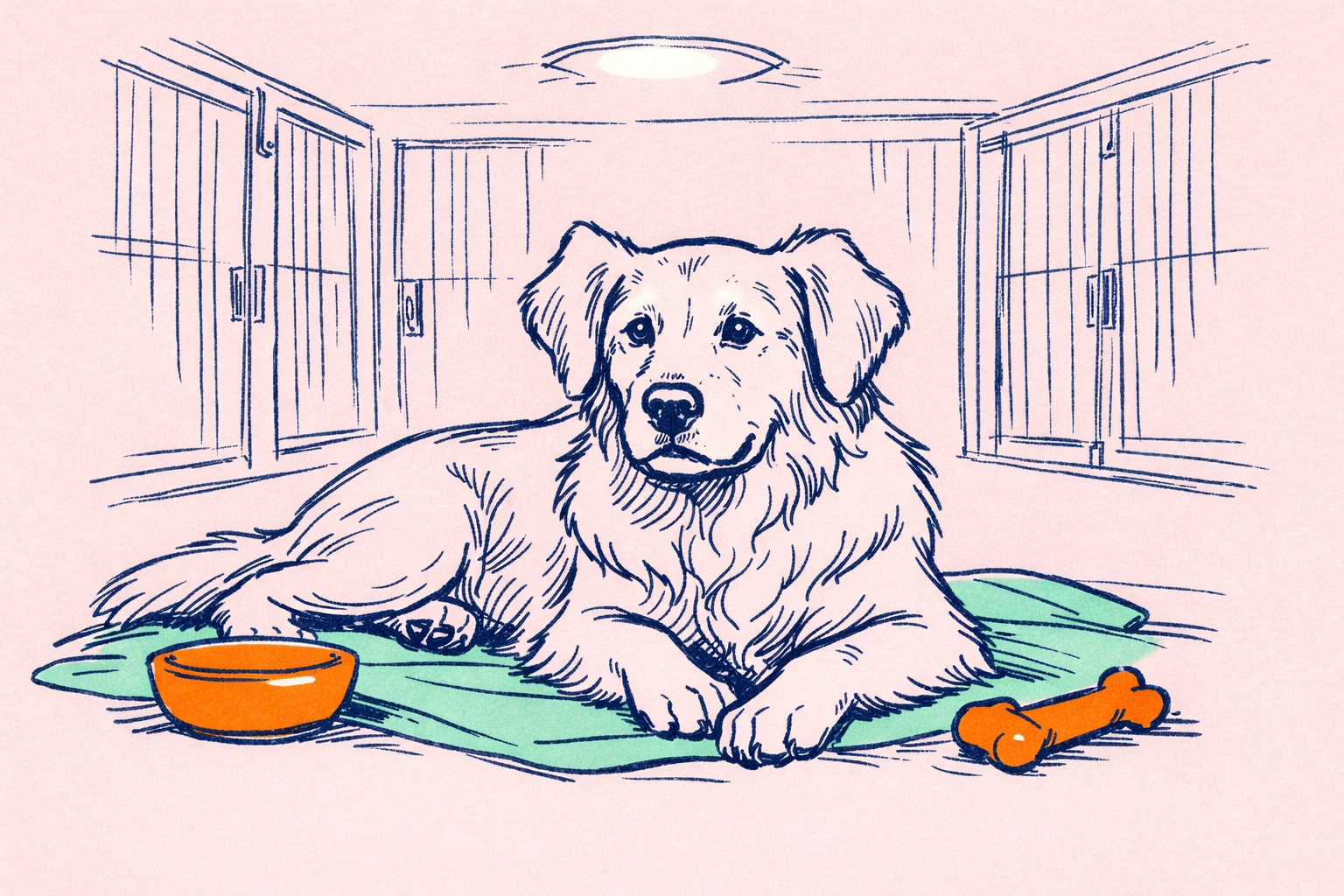
What is the best prep plan before a holiday boarding stay?
Work backward from drop-off. Here is an example for a stay running Tuesday, December 22 to Sunday, December 27. Shift the dates to your trip; the spacing is what matters.
| When | What to do |
|---|---|
| Two weeks out (Tue, Dec 8) | Confirm the reservation and vaccine records. Never boarded? Book a trial night now. |
| One week out (Tue, Dec 15) | Start daily digestive support so the gut settles before the stay instead of during it. |
| 4 days out (Fri, Dec 18) | Freeze the menu. No new chews, treats, or holiday scraps until after pickup. |
| 3 days out (Sat, Dec 19) | Pre-portion every meal into labeled bags, plus two spares. |
| 2 days out (Sun, Dec 20) | Write a one-page feeding sheet: amounts, times, toppers, foods to avoid, your number, your vet's. |
| Day before (Mon, Dec 21) | Normal day, long sniffy walk, early bedtime. Pack an unwashed t-shirt and their blanket. |
| Drop-off (Tue, Dec 22) | Feed half of breakfast. Hand over the bags and sheet, keep the goodbye short. |
A daily pre + probiotic with pumpkin, started about a week ahead, gives the gut one consistent thing to hold onto while everything else changes.
Shop Digestive ProbioticsA calming chew 30 to 60 minutes before the drive can take the edge off the handoff for pups who panic in the car.
What should I ask the boarding facility about feeding and schedules?
Ask before you book. A good facility answers these easily.
- Will you feed only what I send, including toppers and supplements?
- How many meals a day, and can you match my 7 a.m. and 5 p.m. times?
- What treats do staff hand out, and can you skip them for my pup?
- If stool goes loose, do you add rice, switch foods, or call me? Ask them to call first.
- How much of the day is playgroup versus rest, and can I get a text update on day two?
Share the honest version of your pup's stress signals too. AAHA recommends telling staff about medical conditions and special needs up front, so they can plan around them instead of finding out at 9 p.m. on night one.
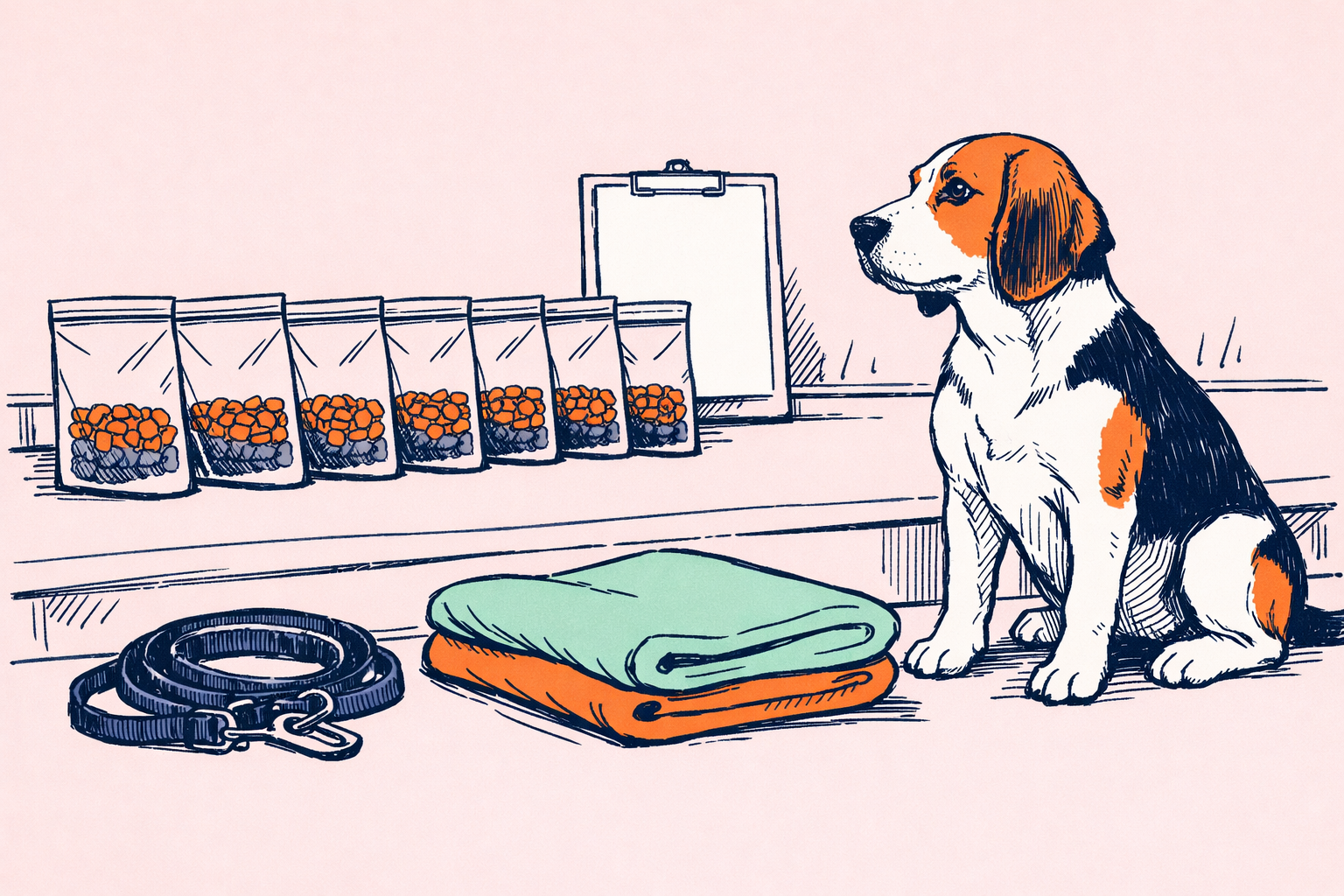
How do I settle my dog's stomach in the first 48 hours home?
Treat pickup day as a recovery day, not a celebration. Mild boarding diarrhea usually resolves within 24 to 48 hours once routine returns.
- Hour 0 to 2: Go straight home. Offer water in small amounts rather than one full bowl.
- Hour 2 to 3: Feed half a normal meal of their usual food. Nothing rich, nothing new.
- Rest of day one: Short leashed potty walks only, no dog park, no reunion with visiting relatives. If the house is full, give them a quiet room with their own bed.
- Day two: Split the daily amount into three smaller meals. A spoonful of Pumpkin Plus adds soluble fiber, which absorbs extra water in the colon and helps firm loose stool.
- Day three: Normal portions and walks once stool is forming. Keep the probiotic going another week.
Expect the first stool at home to be the worst one. Improvement shows up as a change in shape before a change in frequency.
When should I call the vet about boarding diarrhea?
Call your vet the same day if you see any of these.
- Still watery diarrhea after about 48 hours at home
- More than a streak of blood, or any black, tarry stool
- Vomiting alongside the diarrhea, especially repeated vomiting
- Real lethargy, or no interest in food for 24 hours
- Tacky gums, sunken eyes, or skin that stays tented when lifted
- A tense, painful belly or a hunched posture
Puppies, seniors, and toy breeds get a shorter leash (closer to 12 hours than 48) because they dehydrate quickly. The AKC notes that diarrhea with blood, vomiting, loss of appetite, or significant lethargy warrants an emergency visit. Bring a stool sample, since parasites like giardia also spread in group settings.
FAQ
How long should diarrhea last after boarding?
Usually 24 to 48 hours once routine returns, firming over two or three days. Still watery past 48 hours means call the vet.
Should I start probiotics before boarding or after?
Before. A week ahead, continued through the stay, beats starting after the diarrhea begins. In a randomized shelter trial, supplemented dogs passed fewer loose stools in the first week after moving into a kennel facility.
Should I switch to bland food after pickup?
Your pup's regular food is usually the better choice. Switching to rice and chicken introduces yet another diet change for the gut to process. If your vet recommends a bland diet, follow their guidance, but otherwise stick with familiar meals in smaller portions.
Will my dog always get diarrhea when boarded?
Not necessarily. Most pups adjust with repeat visits to the same facility. Starting gut support a week before, sending their own food, and choosing a quieter kennel all help shrink the reaction over time.
Does this mean my dog hates boarding?
Not necessarily. Pups who love the place still get loose stool, because the gut responds to excitement as much as to fear. Using the same facility each time usually shortens the episode.
This article is for general education and is not a substitute for veterinary advice. If your pup has ongoing or severe symptoms, check in with your vet.