


Why Is My Dog Stiff and Slow the Day After a Big Hike?

Written by Finn Team · Published August 27, 2026 · Updated August 27, 2026
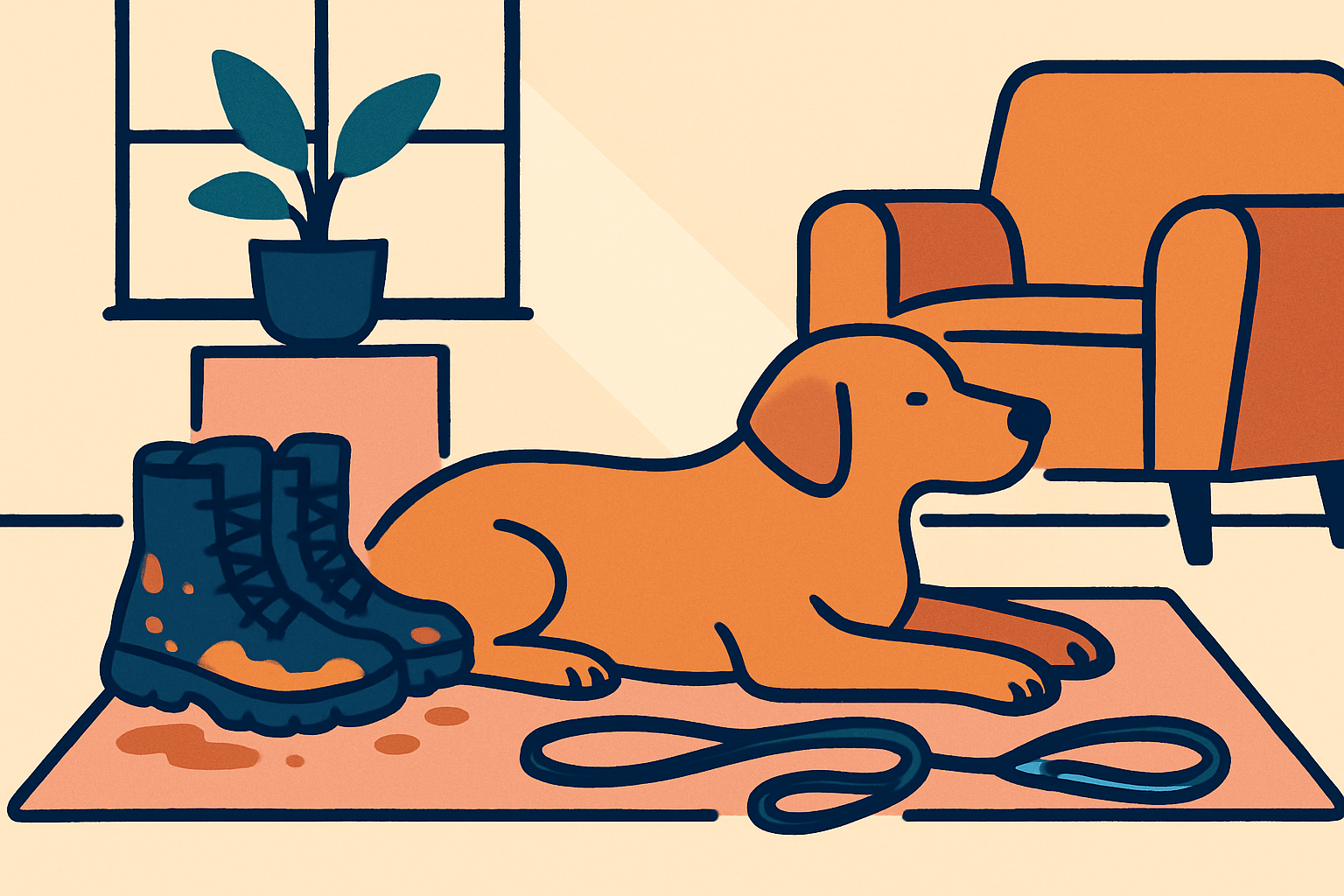
Next-day stiffness after a long hike is usually ordinary muscle soreness, the same achy, slow-to-get-going feeling you have after a hard day outside. It happens because most pups get short potty walks all week and then get asked for five miles of uneven trail on Saturday. Mild soreness eases within 24 to 48 hours with rest and gentle movement. A limp that favors one leg, worsens, or lasts past two days is a different problem and deserves a vet visit.
Why is my dog stiff and slow the day after a big hike?
Muscles unused to sustained work take on small amounts of strain during long or hilly efforts, and the soreness tends to peak the next morning rather than right after the hike. Trail work also loads tendons, ligaments, and paw pads in ways a flat sidewalk never does. Add ten hours of hard sleep without moving, and morning stiffness makes sense.
Ordinary soreness looks like this:
- Slow to stand after a nap, then loosening up within a few minutes of walking
- Stretching more than usual, especially long morning play bows
- Hesitating at stairs or the jump into the car
- Extra licking at the paws after a rocky trail
What is the "weekend warrior" pattern in dogs?
Weekend warrior syndrome is what happens when a mostly sedentary body gets asked for an athletic effort with no build-up. The American Kennel Club puts it plainly: well-conditioned dogs are less likely to be injured than dogs who lounge most of the week and then play hard on occasion. Fitness comes from frequency, not from one heroic day.
Twenty minutes of sniffy neighborhood walking Monday through Friday builds almost no endurance, so Saturday's five miles with 900 feet of climbing is not a hike for your pup, it is a race. Muscles fatigue first, and once they do, joints and ligaments absorb more of the load. That is when a bad landing off a rock becomes an injury instead of a stumble.
Is my dog sore or actually injured?
Soreness is symmetrical, mild, and improving. Injury is one-sided, sharp, and stays the same or gets worse. Run this comparison on Sunday morning.
| What you see | Likely just sore | Likely an injury |
|---|---|---|
| Pattern | Stiff all over, both sides | Favoring one specific leg |
| Over the day | Loosens up with light movement | Same or worse after rest |
| Timeline | Better in 24 to 48 hours | Still limping on day three |
| Weight bearing | Uses all four legs | Holds a leg up or toe-touches |
| Touch | Tolerates gentle handling | Yelps, pulls away, guards a spot |
How do I condition my pup so five miles feels normal?
Build a base first, then add distance slowly. A reasonable target for a healthy adult pup is 30 to 45 minutes of brisk, purposeful walking most days, with the long weekend outing growing by no more than about 10 percent a week. A four to six week ramp toward a real hike:
- Weeks 1 to 2: 30 minutes of steady walking, four or five days a week. Steady means moving, not stopping at every mailbox.
- Weeks 3 to 4: Add one hill day and stretch the weekend walk to 2 or 3 miles on trail surfaces.
- Weeks 5 to 6: Add strength work twice a week. Sit-to-stands, backing up down a hallway, and slow walking over a line of broomsticks build the rear-end and core muscles that stabilize joints on uneven ground.
- Always: Plan an easy day after the long day. Recovery is when fitness gets built.
Two caveats: large breed puppies are still growing for 12 to 18 months, and the AKC advises waiting for growth plates to close before structured conditioning. A senior pup can keep hiking, just in shorter, flatter doses.
What does a warm-up and cool-down actually look like?
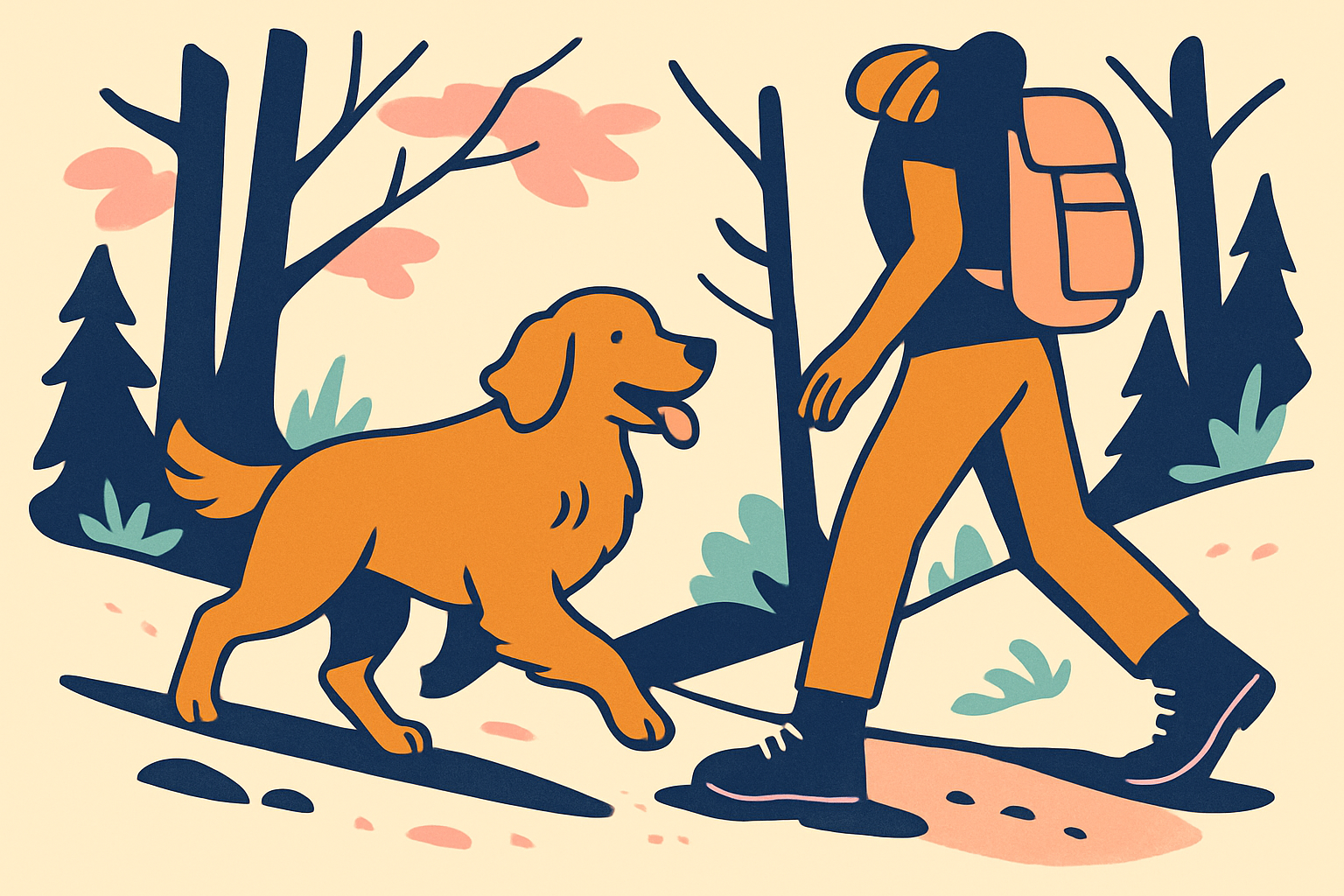
Five to ten minutes on each end, and that is it. A board-certified veterinary sports medicine and rehabilitation specialist recommends a warm-up of roughly 5 to 10 minutes, noting it takes about ten minutes at a moderate pace for muscle temperature to come up, then active stretches like play bows and treat-guided body curves. The cool-down runs about as long at lower intensity.
In practice: walk the first half mile from the trailhead easy instead of letting your pup rocket up the climb, and walk the last five minutes slowly instead of sprinting to the car. The AKC notes cooling down helps heart rate and breathing return to baseline and helps keep muscles from getting sore.
Check the paws, too. Rock and hot ground both do quiet damage, and summer trail temperatures can leave pads tender for days. A balm like Paw Hero, with olive oil, avocado oil, chamomile, and aloe, helps protect and repair rough, dry pads.
Does year-round joint support beat reacting after the fact?
Joint support works like conditioning does, through consistency rather than crisis response. Glucosamine, chondroitin, MSM, turmeric, and green-lipped mussel support cartilage and comfortable movement over months of daily feeding, not as a Sunday morning rescue. Keeping your pup lean matters just as much, since every extra pound gets carried up every hill.
A daily chew that supports joint comfort and mobility year round, so hike day is not a shock to the system.
Shop Hip & JointWhen should I call the vet instead of waiting it out?
Call the same day if your pup will not put weight on a leg, cries out, or has obvious swelling. Sudden non-weight-bearing lameness in a back leg is a classic sign of cranial cruciate ligament trouble, which Colorado State University calls one of the most common causes of hind limb lameness and later arthritis. Get seen promptly for any of these:
- Limping that has not clearly improved after 48 hours
- Holding a leg up, hopping, or toe-touching only
- Swelling, heat, or a joint that looks different from its match
- Yelping when touched, or trembling and panting at rest
- Dark brown or cola-colored urine after hard exercise, a sign of muscle breakdown that veterinarians at the University of Illinois treat as urgent
Waiting it out is fine for one stiff morning. It is not fine for a limp that has settled into one leg.
FAQ
How long should soreness last after a hike?
Usually 24 to 48 hours, with steady improvement each day. If your pup is no better on day three, book a vet visit.
Should I rest my dog completely the next day?
No. Short, slow leash walks a few times a day beat total crate rest for ordinary soreness. Skip the dog park, fetch, and stairs.
Can I give my dog ibuprofen or aspirin?
Never give human pain medication to your pup. Ibuprofen and acetaminophen are toxic to dogs. Ask your vet for a dog-safe option instead.
This article is for general education and is not a substitute for veterinary advice. If your pup has ongoing or severe symptoms, check in with your vet.