


Why Is My Dog Suddenly Itchy in Winter With No Pollen?

Written by Finn Team · Published November 9, 2026 · Updated November 9, 2026
Winter itch is rarely one thing. It is a stack of small things that arrive the week your heat turns on: dry forced-air heat, a furnace stirring up dust and mold spores from ducts and rugs, indoor allergens that never had a season to begin with, and winter bathing habits that strip the coat when it needs oils most. Most of it is manageable at home, and the signs that it is something bigger are clear.
Why is my dog itchy in winter when there is no pollen outside?
Because pollen was only ever part of the picture. The allergens inside your house (dust mites, mold, dander, storage mites in dry food) do not take a winter break, and cold air makes skin drier and more reactive.
Cornell University College of Veterinary Medicine notes that atopic dermatitis may affect 10 to 15 percent of dogs, and while 40 to 75 percent of cases start out seasonal, they can progress to year round. A pup who only scratched in August for three years can start scratching in January, and allergic skin has a weaker outer barrier, so dry air hits harder.
Can dry indoor air really make a dog itch?
Yes. Cold air holds very little moisture, and heating it indoors drops relative humidity further, often into the teens or twenties. Skin already short on water flakes, tightens, and itches.
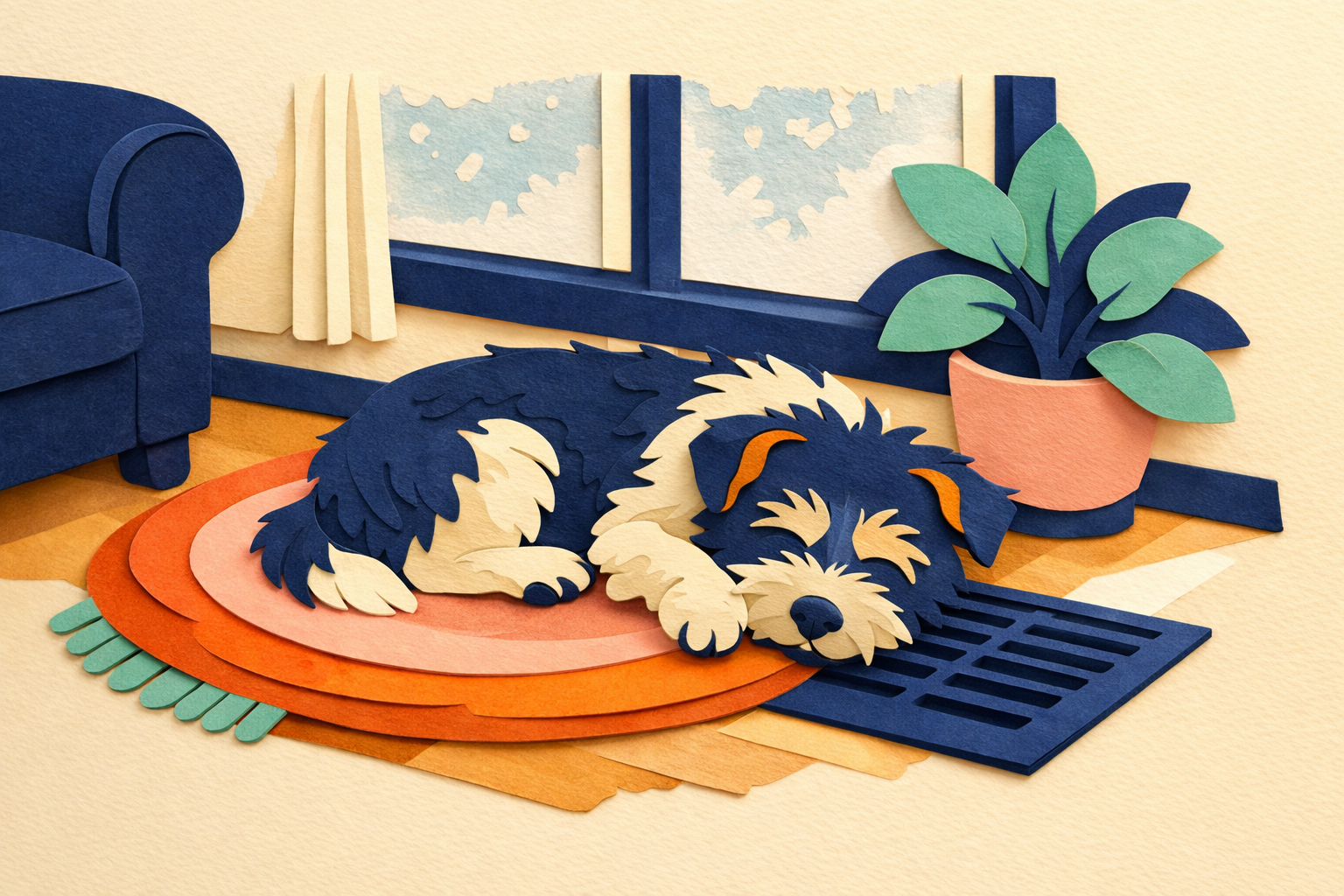
The EPA recommends keeping indoor relative humidity between 30 and 50 percent, and always below 60 percent, a sensible target for dogs too. Set a cheap hygrometer at dog height. Floor-level air near a vent is drier and dustier than the air you breathe standing up, and that is where your pup sleeps.
Do dust mites and furnace dust make winter itch worse?
Often, yes. When the furnace fires up for the first time in months, it pushes settled dust, dander, and mold spores back into the air your pup breathes and sleeps in. Dust mites are among the most common environmental allergens in itchy dogs, and they live year round in bedding and carpet.
A few habits move the needle. Wash dog bedding weekly in hot water and dry it fully, since mite allergen sits in the droppings and has to be washed out. Change the furnace filter when the heat goes on, then every 60 to 90 days. Vacuum your dog's main rooms twice a week, couch cushion included.
Is winter bathing helping or hurting my dog's skin?
It depends on what you use and how often. Frequent hot baths with a stripping shampoo dry an already dry coat, but regular gentle bathing is one of the better things you can do for an allergic pup, since it rinses allergens off.
For most dogs in winter, a bath every two to four weeks with a soap-free, oatmeal or moisturizing shampoo in lukewarm water is a good middle ground. Let the lather sit five to ten minutes, rinse longer than you think you need to, and towel dry rather than using a hot dryer. If your vet prescribed a medicated shampoo, follow their schedule.
The AKC notes that dry, flaky skin can also signal hypothyroidism or Cushing's disease, so heavy flaking with thinning patches is a vet conversation, not a shampoo question.
What is the quick winter itch home audit?
Do this once, in an afternoon, then give it three to four weeks before judging.
- Humidity: hygrometer at floor level, target 30 to 50 percent. Run a humidifier overnight in the sleeping room, a few feet from the bed rather than aimed at it, and clean the tank twice a week.
- Bedding: hot wash weekly, including bed covers and the blanket on the couch.
- Air: fresh furnace filter now, plus a HEPA purifier in the dog's main room.
- Post-walk wipe-down: a damp cloth over feet, belly, and groin after walks, since sidewalk salt and de-icer irritate paws and get licked off. A balm like Paw Hero helps protect cracked pads.
- Fleas: yes, in winter. Fleas live happily in a heated house, so stay on prevention.
- Omega-3s: a daily dose, started now, judged in eight weeks.
Do omega-3s help with dry winter skin?
They support the skin barrier from the inside and are one of the few supplement ingredients with real veterinary backing for skin. They work slowly, so start now, not February.
Today's Veterinary Practice notes that omega-3 fatty acids such as EPA and DHA may reduce inflammation secondary to allergic disease in dogs, and essential fatty acid supplements are commonly included as part of a broader dermatology plan. Marine sources (fish oil, salmon oil, green-lipped mussel) supply EPA and DHA directly, while flax gives a precursor dogs convert poorly.
A daily soft chew with wild Alaskan salmon oil, biotin, vitamin E, and zinc supports skin and coat through heating season.
Shop Skin & Coat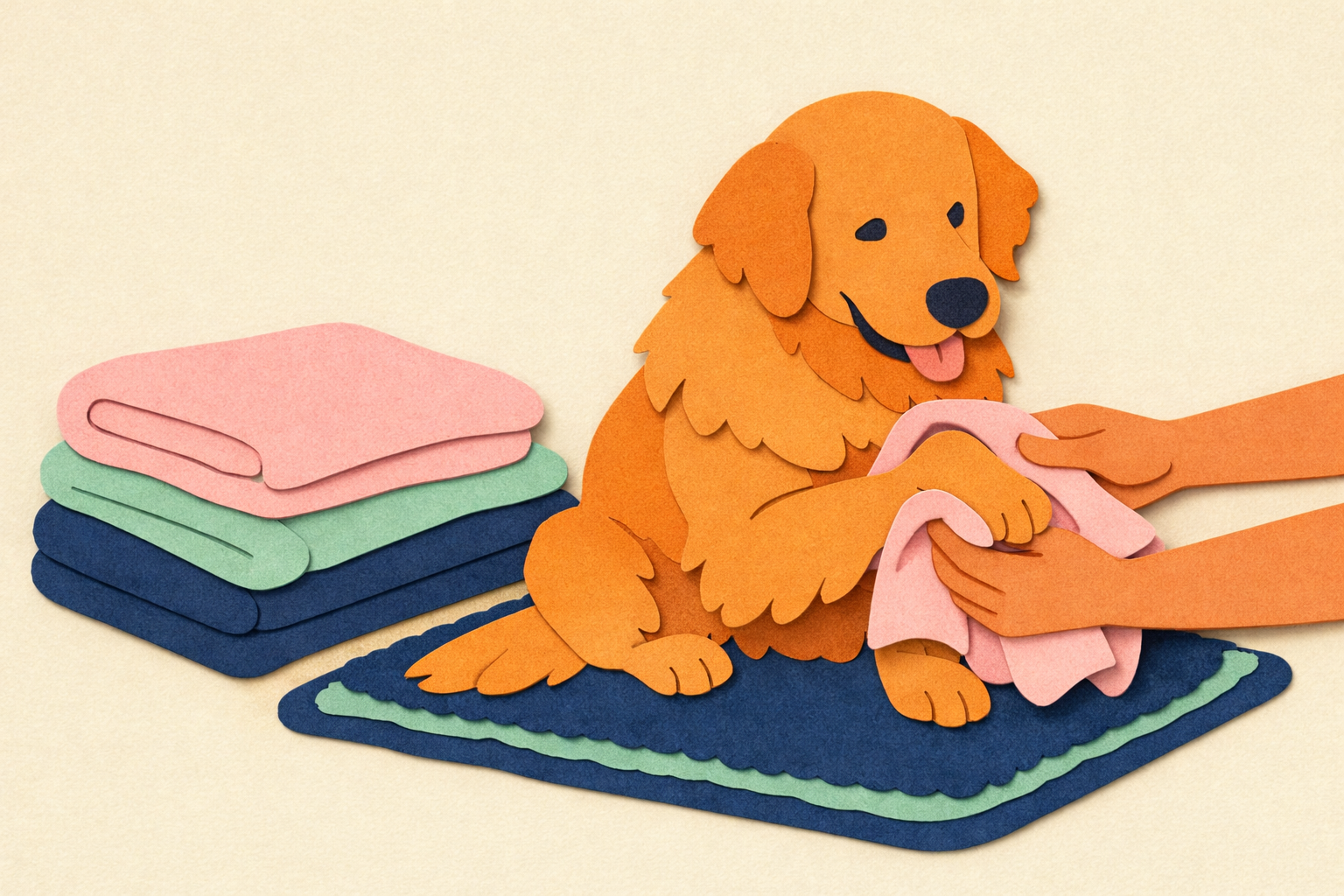
When should I see a vet instead of managing this at home?
Home care is the right first step for mild, generalized winter dryness. It is the wrong step when skin is broken or infected, or the itch is taking over your pup's day. Book a visit if you see:
- Open sores, scabs, hot spots, or skin that smells yeasty
- Recurring ear infections, head shaking, or dark ear discharge
- Hair loss in patches, thickened skin, or saliva-stained brown fur on the feet
- Four to six weeks of a solid home routine with no improvement
- Sudden intense itching with crusting on ear margins and elbows, a possible sign of sarcoptic mange
A workup usually includes skin cytology, a scrape for mites, and an ear exam. For milder, allergy-driven flares, a daily chew like Allergy & Itch with colostrum and quercetin can support a normal histamine response alongside the changes above.
FAQ
What humidity level is best for a dog in winter?
Aim for 30 to 50 percent, measured at floor level. Below 30 percent the air pulls moisture from skin, above 60 percent you feed dust mites and mold.
How often should I bathe an itchy dog in winter?
Every two to four weeks for most dogs, lukewarm water, soap-free shampoo, unless your vet set a different schedule.
Can dogs be allergic to dust mites?
Yes. They are among the most common environmental allergens in atopic dogs, and because they live indoors, signs show up all year.
How long do omega-3s take to show in the coat?
Plan on 8 to 12 weeks. Skin and hair turn over slowly, so a dose started in November is a January result.
This article is for general education and is not a substitute for veterinary advice. If your pup has ongoing or severe symptoms, check in with your vet.