


Benadryl for Dogs: Safe Dosing and the Mistakes to Avoid

Written by Finn Team · Published September 24, 2026 · Updated September 24, 2026
If you are giving your pup Benadryl, use plain diphenhydramine and nothing else. The dose most vets work from is about 1 mg per pound of body weight, two to three times a day, matching the 2023 AAHA allergic skin disease guidelines (2 to 3 mg/kg every 12 hours) and the Merck Veterinary Manual range cited by the American Kennel Club. The bigger danger is the box, not the number: anything labeled "-D", "PE", "Plus", or "Nighttime" can contain pseudoephedrine, phenylephrine, or acetaminophen, and liquids or melt-aways can contain xylitol.
How much Benadryl can I give my dog?
Plain diphenhydramine is dosed at roughly 1 mg per pound, up to two or three times daily, which is why a standard 25 mg adult tablet is a common single dose for a 25 pound dog. Confirm the number with your own vet first, especially for puppies, seniors, or pups on other medications.
| Dog's weight | Typical diphenhydramine dose | What that looks like |
|---|---|---|
| 5 lb | about 5 mg | 2 mL children's liquid (12.5 mg/5 mL) |
| 10 lb | about 10 mg | 4 mL children's liquid |
| 25 lb | about 25 mg | one 25 mg adult tablet |
| 50 lb | about 50 mg | two 25 mg adult tablets |
| 75 lb | about 75 mg | three 25 mg adult tablets |
| 100 lb | about 100 mg | four 25 mg adult tablets |
Skip time-release capsules entirely, since dogs absorb them differently and a chewed capsule can dump the whole dose at once. Give tablets with a little food if your pup has a sensitive stomach. VCA Animal Hospitals notes oral diphenhydramine usually takes effect in about one to two hours and is short acting, generally clearing within 24 hours.
Which Benadryl products are dangerous for dogs?
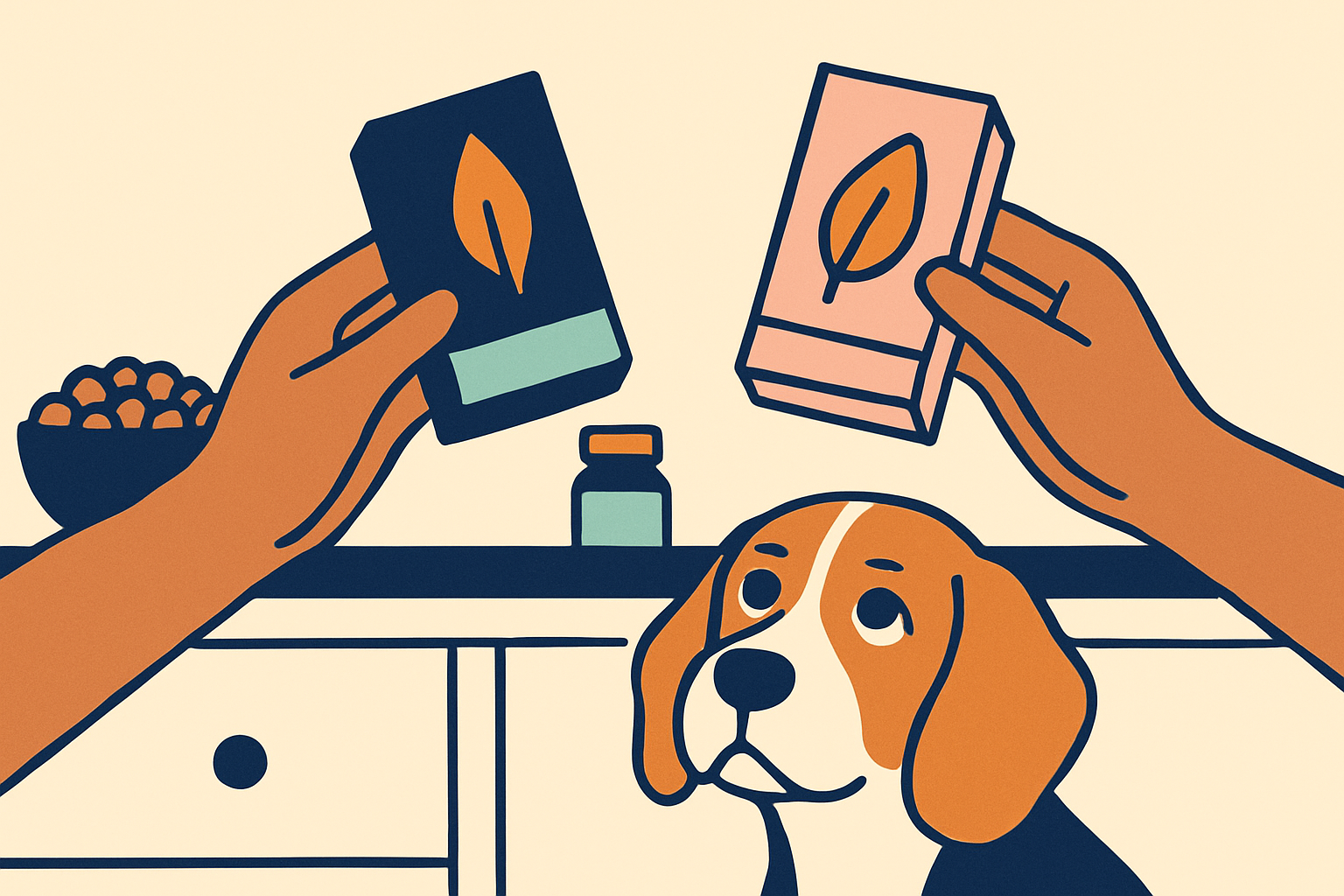
Anything that is not 100 percent plain diphenhydramine. Grabbing the wrong box off the shelf is the most common mistake we hear about.
- "Allergy & Congestion" or "-D" formulas: these add pseudoephedrine or phenylephrine, and Pet Poison Helpline lists decongestants as toxic to dogs, with a narrow margin between a small dose and a serious problem.
- Nighttime cold and pain formulas: these often pair diphenhydramine with acetaminophen, which dogs metabolize poorly.
- Liquids, gel caps, melt-away tabs, and chewables: these can contain xylitol or alcohol. AKC flags xylitol, alcohol, and acetaminophen as reasons to read the full inactive ingredient list, not only the active panel.
- Topical creams and sprays: fine for people, but a pup will lick them off.
If the label says anything other than diphenhydramine hydrochloride in the active ingredients, put it back.
When is Benadryl actually the right call?
Benadryl earns its keep for acute, occasional, histamine driven events: a bee or wasp sting, a bug bite, hives that popped up in the last hour, or mild swelling at a vaccine site. These are short lived reactions where you need something working within an hour or two.
Common side effects include drowsiness, dry mouth, urinary retention, and sometimes the opposite of sedation, a wired and restless pup. AKC also lists conditions that call for extra caution or avoidance, including glaucoma, heart disease, high blood pressure, seizure disorders, an enlarged prostate, and pregnancy. That is why the vet conversation still matters even when you already know the dose.
Why doesn't Benadryl help my dog's seasonal itching?
Because most chronic itching in dogs is not a simple histamine problem. AAHA's antihistamine table lists diphenhydramine with a blunt footnote: questionable efficacy if given orally, citing a 2020 randomized crossover study in healthy dogs. Canine atopic dermatitis involves a damaged skin barrier and inflammatory pathways an antihistamine barely touches.
Daily dosing has a second cost: it can quietly mask a worsening skin infection, a flea allergy, or an ear problem that needed treatment weeks ago. VCA also notes diphenhydramine can alter skin allergy testing and should be stopped at least two weeks beforehand, so months of daily use can delay the diagnosis that would actually help. If your pup's itch follows the calendar, see our guide on why dogs get itchy again in late summer.
What works better than daily Benadryl for ongoing itch?
For a mildly itchy pup, a layered daily routine beats a daily antihistamine: weekly bathing with a gentle shampoo, wiping paws and belly after walks, year round flea prevention, and omega-3 support for the skin barrier.
That is the gap a daily, non-drowsy supplement fills. Finn's Allergy & Itch chew uses quercetin (a plant compound with natural antihistamine properties), colostrum, bee propolis, and salmon oil to help support a normal histamine response and a healthier skin barrier, no sedation involved. Start it before peak season rather than mid-flare. For the full routine, see what actually helps a dog scratching from seasonal allergies. If the itch is severe, your vet also has prescription anti-itch options that work far better than any antihistamine.
Daily, non-drowsy support for seasonal itch, with quercetin, colostrum, and salmon oil.
Shop Allergy & Itch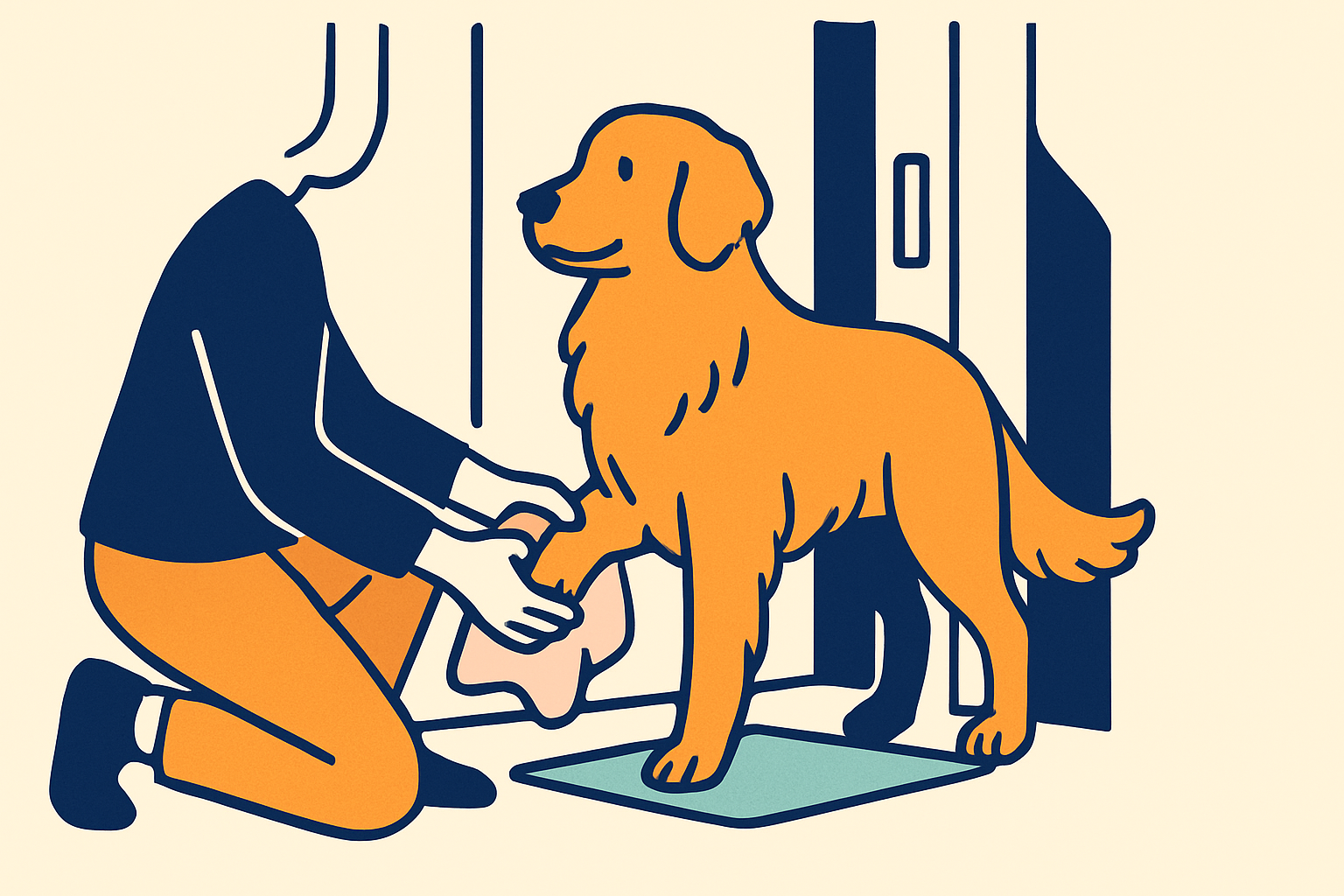
When should you skip both and go straight to the vet?
Some signs mean the itch is no longer the problem, the cause is. Skip both Benadryl and supplements if you see any of these.
- Swelling of the face, muzzle, or throat, trouble breathing, vomiting, pale gums, or collapse. This is an emergency. Go now, do not dose at home and wait.
- Hot spots: raw, oozing, rapidly spreading patches usually need clipping and prescription treatment.
- Hair loss, crusting, scabs, or a yeasty smell: these point to a secondary skin infection.
- Head shaking, ear odor, or dark discharge: ear infections need a vet to look inside the canal.
- No meaningful improvement in 48 to 72 hours, or itching that keeps your pup awake at night.
A reasonable rule: Benadryl is a bridge, not a plan. If you have used it three days running and nothing has changed, the answer is not a fourth day.
FAQ
How long does Benadryl take to work in a dog?
Usually about one to two hours after an oral dose, with effects wearing off within roughly 24 hours. If you see no change in a mild hive reaction after two hours, call your vet rather than redosing early.
Can I give my dog Benadryl every day?
Daily long-term use should be a vet decision, not a default. Oral diphenhydramine has questionable efficacy for chronic canine itch, and daily dosing can mask an infection or delay allergy testing.
What are the signs of too much Benadryl?
Extreme sedation, agitation, a racing heart, dilated pupils, stumbling, tremors, or seizures. Call your vet or an animal poison control line right away if you suspect an overdose.
Can I give Benadryl and an allergy supplement together?
Many owners do, using the supplement daily and Benadryl only for occasional flare-ups, but tell your vet everything your pup takes so they can check for interactions with other medications.
This article is for general education and is not a substitute for veterinary advice. If your pup has ongoing or severe symptoms, check in with your vet.