


Can I Get Tartar Off My Dog's Teeth at Home?

Written by Finn Team · Published October 12, 2026 · Updated October 12, 2026
Here is the line most articles blur: you can manage soft plaque at home, and you cannot remove hardened tartar at home. Plaque is a soft film a brush, chew, or wipe can disrupt. Once it mineralizes into tartar and creeps below the gumline, it is cemented on, and only a veterinary cleaning under anesthesia removes it safely. Please skip the metal scalers sold online.
What is the difference between plaque and tartar on a dog's teeth?
Plaque is a soft, sticky bacterial film that forms within hours of eating. Tartar (or calculus) is that same film after minerals in saliva harden it into a rough brown crust. Soft is removable at home. Hard is not.
The timeline matters more than most owners realize. Plaque starts mineralizing within a day or two, which is why monthly dental care does almost nothing and near-daily care does a lot. Once tartar sets, its rough surface gives new plaque more to grab.
The crust you can see is the least important part. Periodontal disease starts and lives under the gumline, so a mouth that looks fairly white can still have real disease underneath.
Can I scrape tartar off my dog's teeth at home?
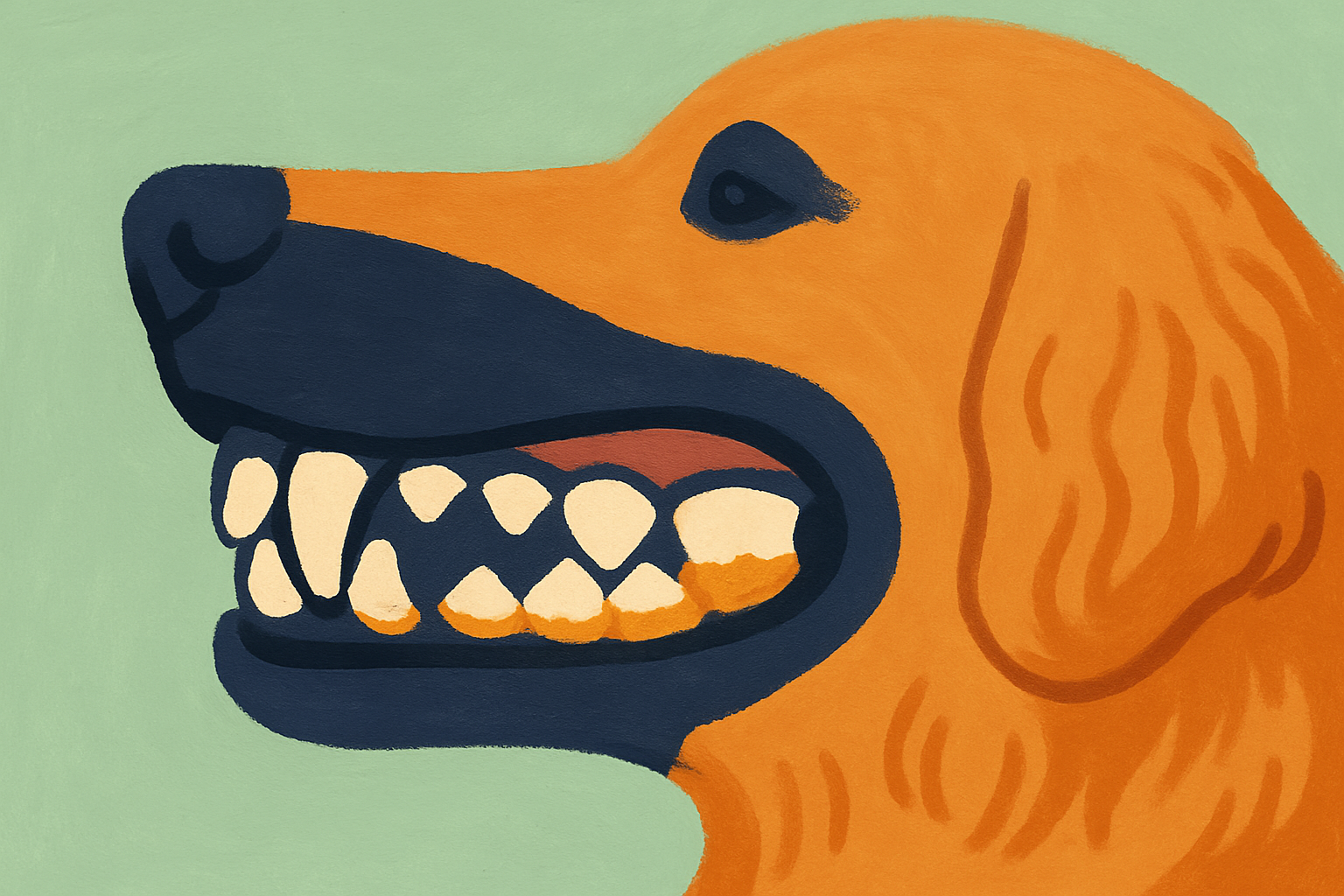
No, and this is the one place we will push back hard. The dental scalers sold online are sharp hand instruments built for an anesthetized patient who is not moving. Used on an awake pup, they can slice gum tissue, chip enamel, and scratch the tooth so the next round of plaque sticks faster.
The American Veterinary Dental College says it plainly in its position statement on dental scaling without anesthesia: tartar is firmly adhered to the tooth, removing it takes power scalers plus hand instruments with a sharp working edge, and even slight head movement can injure the mouth or get the handler bitten. It also notes that reaching under the gumline on every tooth is not possible in an unanesthetized dog.
There is also the polishing problem. Scaling leaves micro-scratches that professional cleanings finish by polishing smooth, a step a home scrape skips entirely.
What about anesthesia-free cleanings at a groomer or pop-up clinic?
They make teeth look whiter without treating the disease. Because the dog is awake, the work happens on visible outer surfaces only, and the gumline is left untouched.
Reporting in JAVMA News sums up the objections: a complete oral exam is not possible in an awake patient, and anesthesia with intubation is what allows pain-free treatment while protecting the airway from aspiration. The real cost is delay: a cosmetically clean mouth buys another year of feeling fine while bone loss continues underneath.
What actually works at home, ranked by how little cooperation it needs?
Pick the highest-effort option your pup will genuinely accept every day, not the one that sounds most thorough.
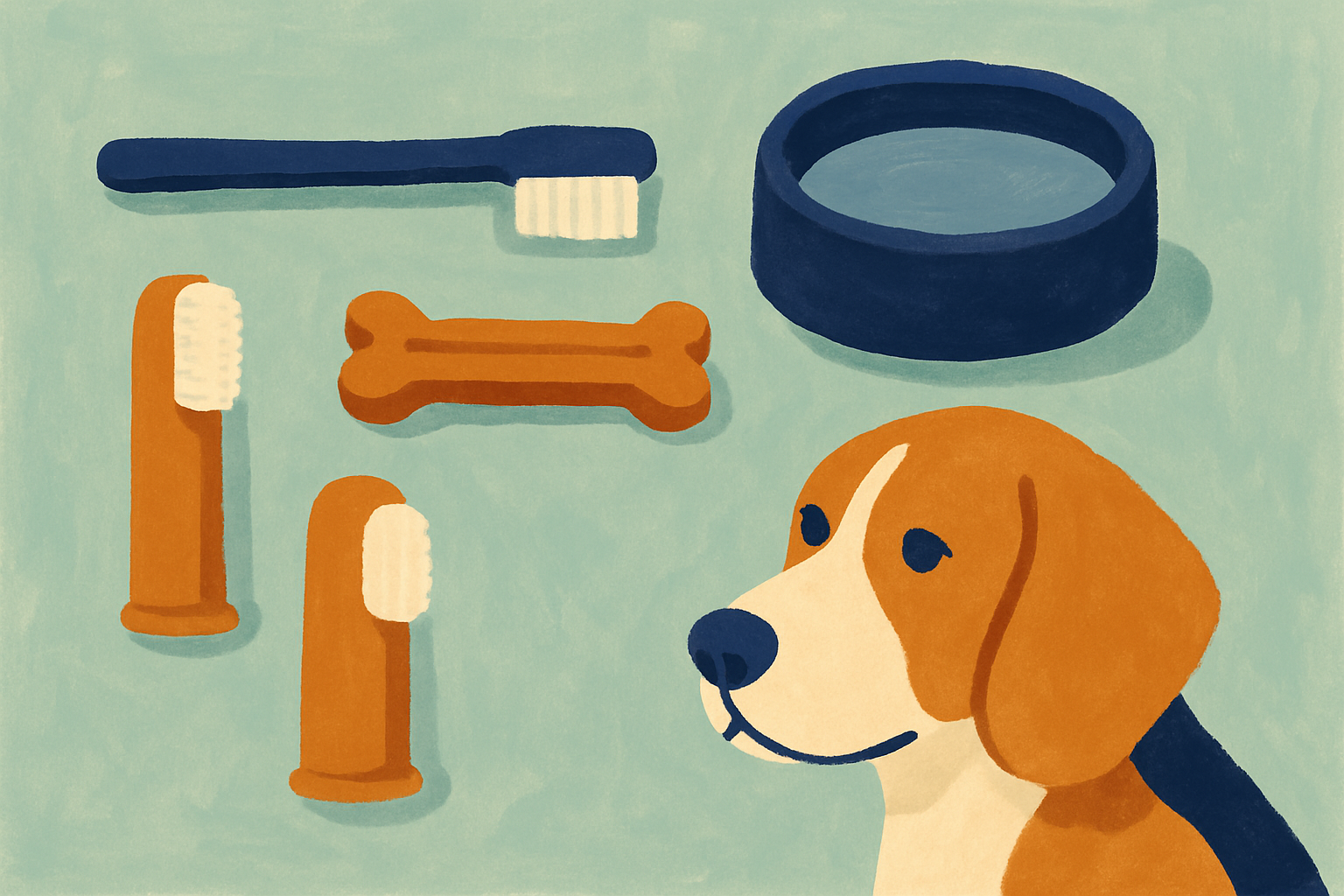
- Water additive (easiest). Pour it in the bowl and walk away. Modest effect, zero cooperation.
- Dental chew, one a day. Real mechanical scrubbing with almost no handling, which is why texture and daily use matter more than flavor. Our Plaque Patrol Dental Chews are built for this slot, no brushing required.
- Dental powder on food. Sprinkle and stir. It works on the saliva side rather than the mechanical side, so it pairs with a chew rather than replacing one.
- Wipes or a finger brush. Now you are touching the mouth, but briefly and with no handle to object to. A good bridge toward brushing.
- Brushing with dog toothpaste (hardest, best). Still the gold standard. Aim for daily, settle for most days, and focus on the outer surfaces of the upper back teeth, where tartar lands first. Never human toothpaste.
The Veterinary Oral Health Council keeps a list of products that met its standards for reducing plaque or tartar, a better filter than packaging claims. If your pup is firmly in the no-toothbrush camp, we went deeper in how to clean your dog's teeth without brushing.
What does a professional dog dental cleaning actually involve?
It is a full procedure, not a polish. Most practices call it a COHAT (comprehensive oral health assessment and treatment), and anesthesia is what makes the useful parts possible.
- Pre-anesthetic exam and bloodwork to check organ function and flag risks.
- IV catheter, fluids, anesthesia with intubation, plus monitoring of heart rate, blood pressure, oxygen, and temperature.
- Full-mouth dental X-rays, which find root abscesses and bone loss hiding under healthy-looking gums.
- Probing every tooth to measure pocket depth and chart the gumline.
- Ultrasonic and hand scaling above and below the gumline, which nothing at home replicates.
- Polishing, to smooth enamel so plaque has less to cling to.
- Extractions if X-rays show diseased teeth, usually with local nerve blocks and go-home pain medication.
On budget: a routine cleaning with anesthesia, monitoring, and X-rays commonly runs a few hundred dollars, and mouths needing multiple extractions can climb past a thousand. Prices swing by region and by your pup's size, so ask for an itemized estimate that states whether X-rays and an extraction range are included. Waiting rarely saves money, since delay makes extractions more likely.
If drop-off stress is part of what keeps you from booking, that is solvable. Ask your vet about a calming plan, and for waiting-room nerves our Calming Aid chew is made to be given 30 to 60 minutes beforehand.
When should I stop waiting and book it?
Brown crust at the gumline, red or puffy gums, breath that has changed character, chewing on one side, dropping food, or pawing at the mouth all mean the home-care stage has passed. From there, home care is maintenance for after the cleaning, not a substitute. Breath is often the first signal, and we ranked what helps in our guide to dog bad breath.
FAQ
Can coconut oil, baking soda, or bones dissolve tartar?
No. Nothing added to food dissolves mineralized tartar, and hard bones and antlers are a common cause of fractured teeth. Preventing new plaque is the realistic home goal.
How often do dogs need a professional cleaning?
It varies. Many medium and large dogs go every one to three years, while small breeds often need annual cleanings because crowded teeth trap more plaque. Your vet's oral exam sets the interval.
Is anesthesia safe for a senior dog?
Age alone is not a disease. Pre-anesthetic bloodwork, IV fluids, and modern monitoring make it manageable for most older pups, and untreated dental infection carries its own risks. Ask your vet about your dog.
Will daily chews mean my dog never needs a cleaning?
They can stretch the interval and keep new plaque down, but they do not remove existing tartar or reach below the gumline. Home care slows the clock, it does not stop it.
This article is for general education and is not a substitute for veterinary advice. If your pup has ongoing or severe symptoms, check in with your vet.