


What Actually Helps a Dog's Bad Breath (Ranked by Evidence)

Written by Finn Team · Published September 21, 2026 · Updated September 21, 2026
Bad breath in dogs is a symptom, not a diagnosis. Most of the time the odor comes from plaque bacteria and gum inflammation, so the answer is plaque control, not a stronger mint. Ranked by evidence: daily brushing with an enzymatic toothpaste first, VOHC-accepted dental chews second, water additives and daily dental support third. If the smell is sudden, rotten, fruity, or ammonia-like, skip the treat aisle and book a vet exam.
Why does my dog's breath smell bad in the first place?
Almost always, the smell is bacteria. Plaque is a sticky bacterial film on the teeth, and those bacteria give off volatile sulfur compounds, the classic "dog breath" smell.
Cornell's Riney Canine Health Center puts the timeline bluntly: minerals in saliva begin hardening plaque into tartar within about 24 hours, and from there it moves to gingivitis and then periodontitis with bone and tooth loss. That 24-hour window is why daily beats occasional. UC Davis notes that the mouth is the most common origin of bad breath, with the nose, throat, stomach, and some systemic diseases making up the rest.
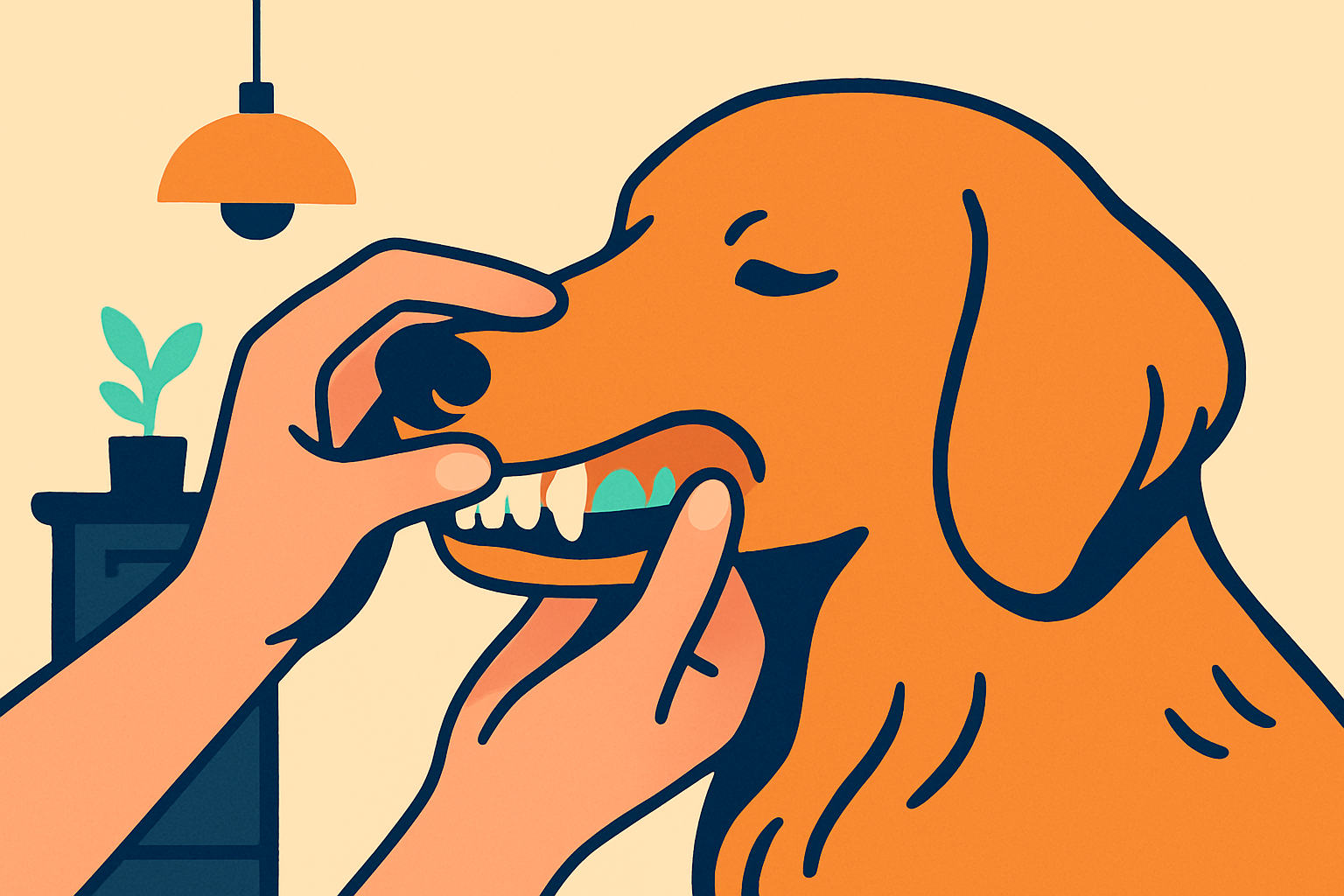
What actually helps a dog's bad breath, ranked by evidence?
Three tiers. Tier one does the heavy lifting, tier three helps at the edges. Most owners start at tier three, which is why the smell keeps returning.
Tier 1: Daily brushing with an enzymatic toothpaste
This is the one thing veterinary groups agree on. The AVMA calls regular brushing the single most effective thing you can do at home between cleanings, noting daily is best while several times a week still works. UC Davis calls daily brushing the gold standard.
- Dog toothpaste only. Human paste is not made to be swallowed, and xylitol is genuinely dangerous for dogs. Enzymatic dog pastes are swallowable and usually taste like poultry or malt.
- Focus on the outer surfaces. That is where plaque collects and where a brush can reach. Thirty seconds a side is a real session.
- Build up over one to two weeks. Day one, a lick of paste off your finger. Day four, a finger brush on the front teeth. Day ten, the full mouth. Rushing is how dogs learn to duck away.
Tier 2: VOHC-accepted dental chews and diets
The Veterinary Oral Health Council reviews submitted trial data and awards a seal to products clearing a defined bar: at least a 20 percent average reduction in plaque or tartar across two trials versus controls. Measurable, and honest about scale. Twenty to thirty percent is a real help, not a replacement for brushing.
Chews work by scrubbing, so texture and chew time matter more than flavor. Size the chew to your dog, supervise, and skip anything rock hard: Cornell cautions that bones, antlers, hooves, and hard toys can wear down or fracture teeth.
Tier 3: Water additives, gels, and daily dental support
These are adjuncts. Cornell lists water additives, gels, and sprays as options alongside brushing, or for when brushing is not possible, which is a fair summary: useful, modest, not a substitute. If your dog will not tolerate a brush, a daily chew plus an additive still beats nothing. More on that in how to clean your dog's teeth without brushing.
Do parsley, coconut oil, or apple cider vinegar help dog breath?
Honestly, no, not in any demonstrated way. Parsley and mint can mask odor for a few minutes, like a breath strip does for us. Coconut oil, apple cider vinegar, and baking soda rinses are popular online and have no controlled evidence behind them for reducing plaque, tartar, or gum inflammation in dogs.
Small amounts are unlikely to hurt, but they cost you time. A dog getting coconut oil for six months is a dog whose gum disease is quietly progressing.
When is bad breath a red flag, not a hygiene problem?
Some breath changes mean you skip the chew aisle and call your vet. UC Davis is direct: when bad breath shows up, the dog should be examined, and if the mouth looks healthy, blood and urine testing may be needed.
- Sudden, rotten, or one-sided odor, especially with pawing at the mouth. Think fractured tooth, abscess, or something stuck in there.
- Drooling, bleeding gums, or blood in the water bowl. Cornell also lists jaw or facial swelling and nasal discharge as reasons to call.
- Dropping food, chewing on one side, or appetite loss. Dental pain is easy to miss because dogs eat right through it.
- Weight loss, or a lump in the mouth.
- Sweet or fruity breath. Can point to diabetes and ketone buildup. That is an urgent call, not a next-week call.
- Ammonia or urine-like breath. Can reflect urea building up when kidneys are not filtering well, often with increased drinking and urination.
No supplement addresses any of these, and no honest company should suggest otherwise. Same instinct as our guide to vet red flags versus at-home care: when in doubt, get eyes on it.
What should I look for in any dental chew or supplement?
The back of the label matters more than the front. Four things to check.
- Independent quality oversight. The NASC Quality Seal means the company passed an outside facility audit and follows adverse event reporting rules. A floor, not a guarantee, but its absence tells you something.
- Third-party testing for potency and contaminants, so what is on the label is in the chew, and heavy metals are not.
- Veterinary formulation input and dose transparency, real amounts per chew instead of a hidden proprietary blend.
- Claims you can verify. Check the VOHC list yourself for anything claiming plaque or tartar reduction, and notice whether a product scrubs plaque or just scents breath.
A worked example on the quality side: Finn's chews are vet-formulated, carry the NASC Quality Seal, and are third-party tested for potency and contaminants. Our once-daily bacon and mint dental chew is built to help fight plaque, scrub at tartar, and freshen breath with no brushing required. It belongs in the daily maintenance tier, not in place of a cleaning.
An easy once-a-day way to keep plaque control going on the days brushing does not happen.
Shop Plaque Patrol Dental ChewsFAQ
How long does it take to improve a dog's breath?
With early plaque, daily brushing usually shows a difference in two to four weeks. If tartar is visible or gums are red, home care alone will not get there, and breath usually improves a day or two after a professional cleaning.
Do dental chews replace brushing?
No. The best-tested chews cut plaque or tartar by roughly 20 to 30 percent versus controls. Useful, but brushing is still the highest-yield habit, and the two work well together.
Which pups need dental care the most?
Small and toy breeds and flat-faced pups get gum disease more often, partly due to crowding and jaw shape. Start home care young rather than waiting for odor.
This article is for general education and is not a substitute for veterinary advice. If your pup has ongoing or severe symptoms, check in with your vet.