


Which Probiotic Would a Vet Pick for Your Dog?

Written by Finn Team · Published September 3, 2026 · Updated September 3, 2026
There is no single best probiotic for every dog. Vets choose based on why you are reaching for one: a short, high-dose course for sudden diarrhea, a multi-strain product during and after antibiotics, or a steady daily pre plus probiotic for maintenance and mild food sensitivities. Match the product to the scenario, give it long enough to judge, and know which symptoms mean you skip supplements and call your vet.
Is there one best probiotic for dogs?
No, and any list naming one winner for every dog is skipping the important question: what are you using it for? Cornell's Riney Canine Health Center notes that probiotics are a well established support for diarrhea and digestive upset, with research also looking at immune function and stress behaviors, so the useful strain and dose shift with the goal (Cornell).
A 2019 systematic review of probiotics for gastrointestinal disease in dogs found the evidence base still limited, with the most consistent signal being a modest shortening of acute, uncomplicated diarrhea (JVIM review). That is a real benefit and also a boundary. Probiotics support a gut that is rebalancing. They do not clear parasites, resolve an obstruction, or make an intolerable food suddenly agree with your pup.
Which probiotic fits which situation?
Here is the decision most vets are actually making, by scenario. Use the row that matches your dog today, not the flashiest label.
| Scenario | What tends to get picked | Why | Timeline |
|---|---|---|---|
| Acute stress or dietary-indiscretion diarrhea (boarding, a garbage raid, a road trip) in a pup who is otherwise bright and eating | A clinic-stocked, high-CFU powder or capsule, often single-strain Enterococcus faecium SF68 or a seven-strain blend around 5 billion CFU per capsule | Dosed as a short course, not a daily habit, with the longest track record in clinics | 2 to 5 days, tapering as stool firms |
| During and after antibiotics | A multi-strain product, given through the course and for 2 to 4 weeks after | Antibiotics flatten microbial diversity, and multi-strain coverage gives the gut more to rebuild with | Start day one, continue at least 2 weeks past the last dose |
| Daily maintenance, mild sensitivity, or a food transition | A daily pre plus probiotic soft chew with fiber, started a week before you switch foods | Consistency matters more than one huge dose, and prebiotic fiber feeds what you add | Give it 3 to 4 weeks before judging stool quality |
| Chronic or recurring GI signs, weight loss, suspected IBD | Diagnostics first, then a vet-directed diet trial. A probiotic is an add-on, not the plan | Chronic enteropathy needs a diagnosis. Bloodwork, fecal testing, and diet response tell you more | Vet visit now, not in three weeks |
What do vets use for sudden diarrhea in dogs?
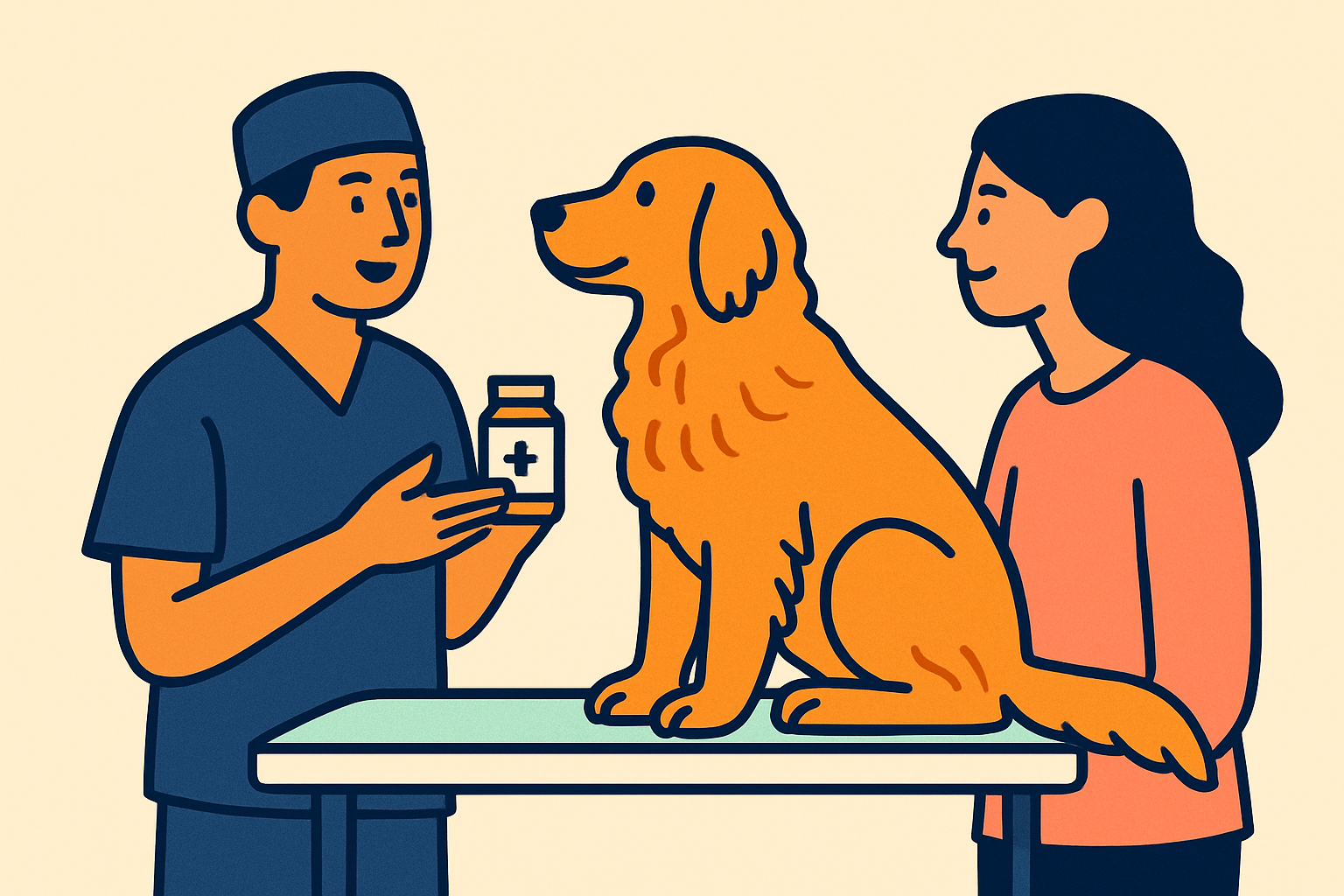
For a short, sharp bout of diarrhea in an otherwise healthy pup, most clinics reach for what is on their own shelf: a high-CFU powder or capsule dosed as a several-day course. Credit where it is due, those staples earned their spot. The single-strain option built on Enterococcus faecium SF68 has been studied in shelter populations, where the effect showed up more clearly in cats than in dogs (Bybee et al., JVIM). The seven-strain veterinary capsules trade that single-strain focus for broader coverage plus prebiotics.
A daily maintenance chew is a different tool, dosed for consistency over months rather than a 72-hour flare. If your pup's stress stomach is a repeat pattern, our piece on travel-related stomach upset covers the prep side.
Should I give a probiotic during antibiotics?
Usually yes, and usually a multi-strain one. Antibiotics reduce the diversity of gut bacteria, and that shift can linger for weeks after the last pill. Space the probiotic about two hours from the antibiotic dose, and keep giving it for two to four weeks after the course ends.
How do I judge whether a probiotic is any good?
This part saves you money, and it applies to every company on the shelf, Finn included. Four things to check:
- NASC Quality Seal. The National Animal Supplement Council audits members on manufacturing, labeling, and adverse event reporting. It is not proof a product works, but its absence means nobody outside the company has reviewed the process.
- A Certificate of Analysis. Ask for a third-party COA on a recent lot. A company that tests will send it. A company that does not will send marketing copy.
- CFU guaranteed at expiration, not at manufacture. Live bacteria die off in storage, so billions "at time of manufacture" tells you nothing about what your pup swallows in month nine.
- Strain-level identity. You want genus, species, and strain (for example Bifidobacterium longum BL999, which Cornell highlights in work on anxious behaviors), because research attaches to strains, not to the word "probiotic" (AKC).
And treat any promise to cure or fix a disease as a red flag. Supplements support and help maintain. That is the honest ceiling.
A daily pre plus probiotic chew with pumpkin and multiple live strains, made for the everyday maintenance row of that table.
Shop Digestive Probiotics
When should I skip the supplement and call the vet?
Some situations are not probiotic situations at all. Call your vet the same day if you see any of these.
- Blood in the stool, black tarry stool, or repeated vomiting
- Lethargy, a painful or bloated belly, or unproductive retching (a true emergency)
- Diarrhea past 48 hours, or any diarrhea in a puppy, senior, or immune-compromised pup
- Weight loss, ongoing appetite loss, or diarrhea that returns every few weeks
- A known or possible toxin, foreign object, or new medication reaction
Puppies deserve extra caution. Their fluid reserves are small and infectious causes like parvovirus move fast. A probiotic on top of an undiagnosed problem only delays the visit that would have helped.
FAQ
How long does a probiotic take to work in dogs?
For acute diarrhea, expect firmer stool within 2 to 5 days. For daily maintenance, give it a full 3 to 4 weeks before judging.
Can I give my dog human probiotics or yogurt?
Yogurt is a snack, not a therapeutic dose, and many dogs handle dairy poorly. Human capsules use strains selected for human guts, so a dog-specific product is the better bet.
Can healthy dogs take a probiotic every day, long term?
Generally yes. Long-term use in healthy dogs is considered low risk, though pups on immune-suppressing drugs should get a vet's okay first.
Does a higher CFU count mean a better product?
Not on its own. Strain identity, a count guaranteed through expiration, and third-party testing matter more than a big number on the front panel.
What about fiber instead of a probiotic?
Fiber is underrated for soft stool, and it pairs well with probiotics. A pumpkin-based topper like Pumpkin Plus adds bulk during a diet change.
This article is for general education and is not a substitute for veterinary advice. If your pup has ongoing or severe symptoms, check in with your vet.